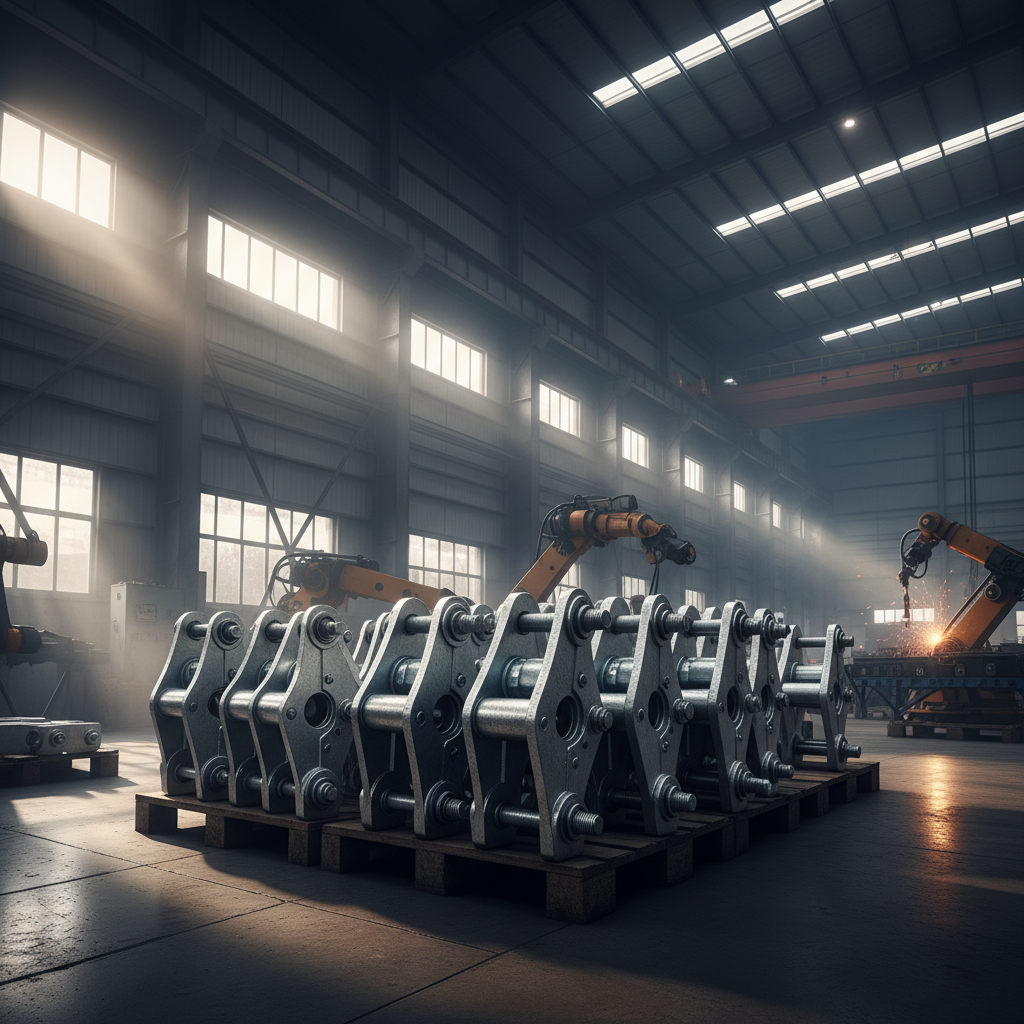
When contractors evaluate the cost of formwork accessories, the search for a competitive shuttering shikanja price often leads to a deeper realization: price is a symptom of material quality and engineering precision. In the heavy-duty environment of concrete casting, a "shikanja" or formwork clamp is not merely a fastener but a critical safety component that prevents formwork blowout under immense hydraulic pressure. Selecting a component based solely on the lowest unit cost frequently results in higher project expenses due to equipment failure or safety delays.
The efficiency of a construction site depends on the seamless integration of various structural supports. From Adjustable Jack Base U Heads to the specific tensioning provided by formwork clamps, every piece must operate in harmony. When the shuttering shikanja price is balanced against the durability of the steel and the precision of the threading, it directly impacts the cycle time of the formwork. A high-quality clamp reduces the time spent on adjustments and ensures that the concrete surface remains mirror-smooth and structurally sound.
Navigating the procurement of metal structural products requires a technical understanding of how these accessories withstand repetitive stress and environmental corrosion. This analysis explores the variables that drive the cost of high-performance clamps and how to identify value beyond the initial invoice. For professionals seeking reliable structural solutions, understanding the relationship between shuttering shikanja price and long-term site productivity is essential for optimizing the overall building budget.


A shuttering shikanja, commonly known as a formwork clamp, is a mechanical device used to hold formwork panels tightly together during the concrete pouring process. Its primary role is to resist the lateral pressure exerted by liquid concrete, ensuring that the panels do not bulge or separate. This is achieved through a high-tension grip mechanism that distributes force evenly across the joint, maintaining the geometric integrity of the column or wall.
Technically, these components are engineered from high-strength steel or casting iron to prevent deformation. The precision of the threading and the grip width are critical; if the tolerances are off by even a millimeter, the clamp may slip or fail to provide the necessary tension. This mechanical reliability is why the market sees a wide variance in shuttering shikanja price, as the cost of precision machining is reflected in the final product.
The cost of a formwork clamp is driven primarily by the grade of steel used and the surface treatment applied. For example, galvanized steel offers superior corrosion resistance compared to raw iron, which is vital for projects in coastal or high-humidity areas. The thickness of the metal also determines the load-bearing capacity, meaning a heavier-duty clamp will naturally command a higher market price but offer significantly more safety.
Another critical factor is the manufacturing process. Components produced via high-pressure die casting or precision stamping exhibit more consistent dimensions and higher fatigue resistance than those made through basic forging. When buyers examine the shuttering shikanja price, they must consider whether the product has undergone rigorous stress testing to ensure it can handle the specified concrete pressure without failing.
Finally, the compatibility with other accessories, such as Tie Rods, Wing Nuts, and Waler Plates, affects the overall value. A clamp that fits perfectly into a standardized system reduces installation labor and prevents the need for makeshift adjustments. In the long run, a slightly higher initial investment in precision-engineered accessories reduces the likelihood of expensive on-site errors.
Evaluating the economic impact of formwork accessories requires moving from a "unit cost" mindset to a "lifecycle cost" analysis. While a cheap clamp may save money on the first purchase, its limited reuse cycle often leads to higher cumulative costs. High-grade clamps are designed for dozens of reuse cycles without losing their tensioning capability or structural integrity.
The real value of a professional-grade shuttering shikanja lies in its ability to maintain constant pressure across multiple pours, which drastically reduces the risk of honeycombing or surface irregularities in the finished concrete, thereby eliminating costly rework.
Furthermore, the reduction in labor time is a hidden financial gain. Components that are easy to tighten and release allow crews to strip and reset formwork faster. When a project's timeline is measured in thousands of man-hours, the efficiency gained from superior hardware far outweighs the difference in the initial shuttering shikanja price.
Different materials provide varying levels of support and longevity depending on the project requirements. Casting iron is often favored for its extreme rigidity and compressive strength, while galvanized steel is the standard for versatility and rust prevention. The choice of material directly correlates with how many times a clamp can be reused before fatigue sets in.
By analyzing the relative durability of common formwork materials, buyers can determine which option provides the best return on investment. The following data represents a relative durability index where higher values indicate a longer operational lifespan under standard construction stresses.
In the construction of thermal power plants or high-pressure power stations, the demands on formwork are extreme. These projects often utilize specialized accessories like PVC Formwork Corner Fillets and heavy-duty clamps to handle massive foundation pours. In these scenarios, the shuttering shikanja price is a secondary concern to the absolute safety and precision of the concrete arc angles and structural joints.
Infrastructure projects also require a combination of steel and plastic components. For instance, using PVC profiles for sealing and cornering alongside steel props and clamps ensures a watertight and aesthetically professional finish. The synergy between these materials prevents leakage and ensures that the internal structural integrity of the concrete is not compromised during the curing process.
The industry is shifting toward modularity and increased automation. We are seeing a transition from basic fasteners to integrated systems that allow for faster assembly and disassembly. This evolution is driven by the need to reduce labor costs and increase the speed of urban construction. Future accessories will likely incorporate materials that offer higher strength-to-weight ratios to simplify handling.
Sustainability is also becoming a primary driver. The move toward recyclable steel and low-emission manufacturing processes is changing how companies price their products. While "green" manufacturing may initially increase the shuttering shikanja price, it reduces the overall environmental footprint of the construction project and aligns with global building certifications.
Additionally, the integration of precision machining allows for "zero-tolerance" formwork systems. These systems minimize the amount of waste material and ensure that every single clamp provides an identical level of tension. This level of standardization is critical for the next generation of prefabricated and high-rise concrete structures.
One of the most common challenges in procurement is the "quality gap"—where the delivered product does not match the technical specifications of the sample. This is often a result of sourcing from suppliers who prioritize low shuttering shikanja price over rigorous quality control. To avoid this, buyers should request material certifications and verify the supplier's manufacturing capabilities.
Installation errors, such as over-tightening or uneven spacing of clamps, can lead to formwork distortion. Training crews on the proper use of accessories, including the correct sequence for tightening Tie Rods and clamps, is essential. Proper installation ensures that the load is distributed evenly, preventing localized failures that could lead to dangerous accidents on site.
Maintenance is the final piece of the puzzle. Clamps that are not cleaned of concrete residue after each use will quickly degrade in performance. Implementing a simple cleaning and lubrication schedule can extend the life of formwork accessories by several years, significantly improving the ROI of the initial purchase.
| Feature | Standard Grade | Professional Grade | High-Pressure Grade |
|---|---|---|---|
| Material | Mild Steel | Galvanized Steel | Alloy/Casting Iron |
| Reuse Cycle | 5-10 Times | 20-50 Times | 100+ Times |
| Corrosion Resistance | Low | Medium-High | Very High |
| Tension Stability | Moderate | High | Extreme |
| Installation Speed | Fast | Very Fast | Moderate |
| Relative Price | Economy | Mid-Range | Premium |
The price is primarily determined by the raw material grade (e.g., galvanized steel vs. cast iron), the precision of the machining process, and the surface treatment used for corrosion protection. Additionally, the load-bearing capacity and the number of guaranteed reuse cycles contribute to the final cost, with higher-spec products commanding a premium for their durability and safety.
High-quality clamps exhibit consistent dimensions, smooth threading without burrs, and a uniform surface coating. You should check for a manufacturer's certification of the steel grade and perform a sample stress test to ensure the clamp does not deform under the intended load. Precision in the grip width is also a key indicator of professional engineering.
While they may be used for low-pressure pours, it is risky. Even in small projects, a clamp failure can lead to concrete leakage and structural defects. It is generally more cost-effective to use mid-range professional clamps that can be reused across multiple small projects rather than buying disposable economy-grade hardware for every job.
Clamps and Tie Rods work together as a tensioning system. While the Tie Rod provides the primary longitudinal strength to keep the formwork from bursting, the clamps (shikanja) ensure that the panels are held firmly against the walers and supports. Without properly functioning clamps, the Tie Rods cannot distribute the pressure evenly across the formwork surface.
The most effective way to extend lifespan is through post-pour maintenance. Thoroughly remove all concrete residue from threads and gripping surfaces using a wire brush. Apply a light layer of industrial lubricant or anti-rust oil before storage. This prevents corrosion and ensures that the components can be easily tightened during the next installation.
Specialized manufacturers have direct control over the casting and machining processes, ensuring that every batch meets strict technical tolerances. They can provide detailed material certifications and offer customized solutions based on your project's specific pressure requirements. General traders often lack this technical oversight, which can lead to inconsistent quality.
The procurement of formwork accessories should never be viewed as a simple commodity purchase. As this analysis has shown, the shuttering shikanja price is a reflection of the engineering integrity and the long-term reliability of the component. By prioritizing material quality, precision machining, and lifecycle value over the lowest initial cost, construction firms can significantly reduce the risk of site failures and optimize their overall project budget.
Investing in professional-grade hardware is an investment in site safety and structural excellence. Whether you are managing high-pressure infrastructure or residential developments, the right combination of steel and plastic accessories ensures a seamless workflow. For those seeking a partner with deep expertise in scaffolding and formwork accessories, visiting www.wrkformwork.com can provide the technical guidance and high-quality products needed for your next project.