Scaffolding clamp swivel type components are crucial for safe and efficient construction, playing a vital role in temporary access and support. Globally, the demand for secure scaffolding systems is steadily increasing due to rapid urbanization, infrastructure development, and a growing emphasis on worker safety regulations. These clamps are integral to creating robust scaffolding structures capable of withstanding considerable loads and diverse environmental conditions. Understanding the intricacies of scaffolding clamp swivel type is not merely a technical exercise; it's a critical element in preventing workplace accidents and ensuring project success.
The construction industry, a major driver of global economic growth, relies heavily on scaffolding for numerous tasks – from building skyscrapers to maintaining bridges. The increasing complexity of modern construction projects demands more adaptable and reliable scaffolding solutions. Scaffolding clamp swivel type, with its ability to create flexible and secure connections, addresses this need directly. According to the International Labour Organization (ILO), improving safety standards in construction remains a significant challenge, with falls from height being a leading cause of fatalities. Utilizing high-quality scaffolding clamps, like those of the swivel type, is a direct response to mitigating these risks.
Furthermore, the rising demand for infrastructure improvements in developing nations, as highlighted by the World Bank’s investment reports, amplifies the importance of affordable and dependable scaffolding solutions. This necessitates a focus on durable, easily assembled, and cost-effective systems, where the scaffolding clamp swivel type becomes a cornerstone component. Its versatility makes it suitable for a wide range of projects, from residential builds to large-scale industrial installations.
Introduction to Scaffolding Clamp Swivel Type
Scaffolding clamp swivel type are integral components in the construction of safe and adaptable scaffolding systems. They provide a pivotal connection point between scaffolding tubes, allowing for adjustments in angle and direction. These clamps are designed to bear significant loads and are routinely used in various construction scenarios, from simple facade maintenance to complex structural builds.
The functionality of a scaffolding clamp swivel type rests on its ability to securely grip and connect scaffolding tubes at varying angles, unlike fixed clamps. This flexibility is critical when navigating uneven surfaces or building around obstructions. Their swivel action enhances adaptability, making them an essential part of modern scaffolding systems.
Defining Scaffolding Clamp Swivel Type
A scaffolding clamp swivel type is a mechanical fastening device used to join scaffolding tubes together, allowing for rotational movement between the connected sections. This swivel action allows for adjustments to the scaffolding structure, compensating for uneven ground or irregular building shapes. Unlike fixed clamps, which maintain a rigid connection, swivel clamps offer a dynamic and adaptable solution for complex construction environments.
The core principle behind these clamps lies in their robust gripping mechanism, typically featuring a screw-tightened jaw system that secures the tubes without damaging them. Their construction utilizes high-strength materials to ensure durability and reliability under heavy loads. This definition is fundamental to understanding their role in modern construction projects.
The use of scaffolding clamp swivel type is not limited to building construction. They also find applications in industrial maintenance, event staging, and even disaster relief scenarios, where the need for rapid and adaptable access solutions is paramount. Their connection to the core principles of safe work practices makes them crucial for industries across the board.
Core Components and Characteristics
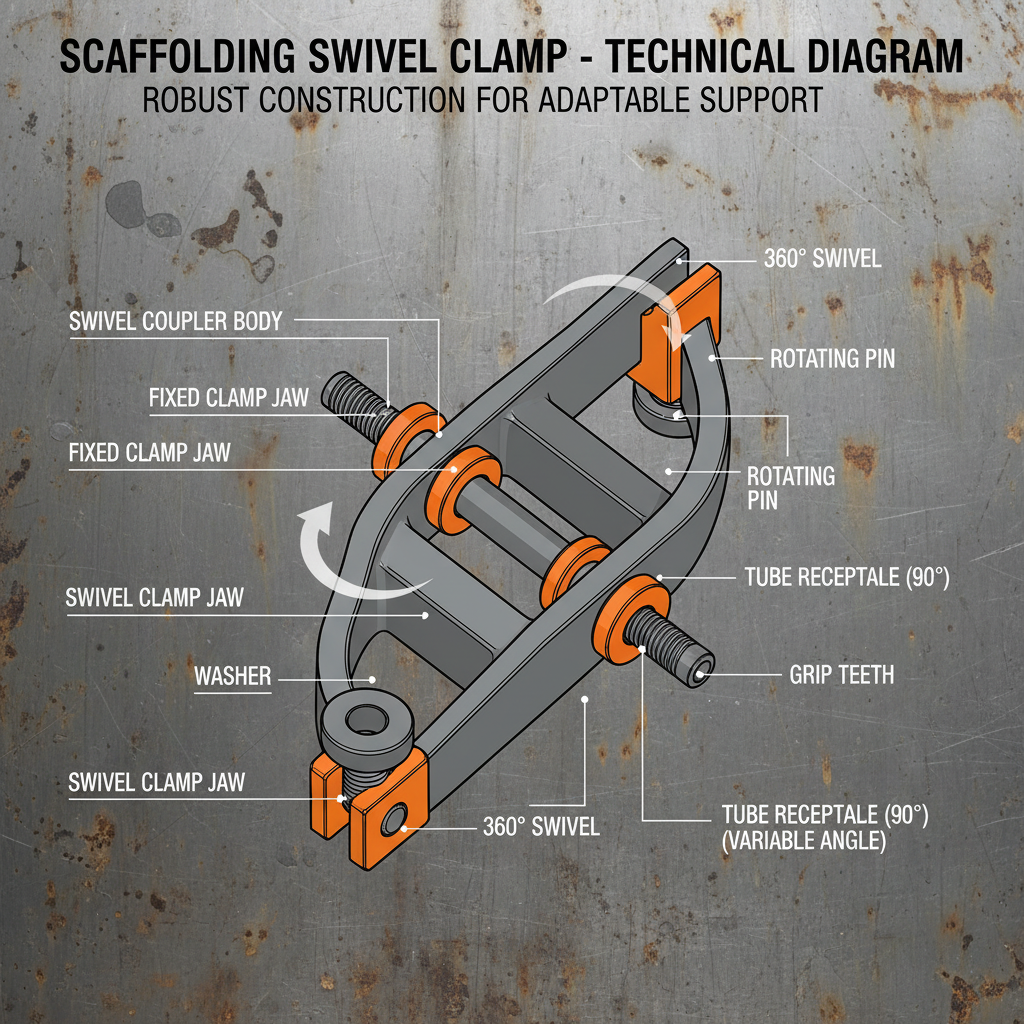
The effectiveness of a scaffolding clamp swivel type hinges on several key components. Primarily, these include a robust body (typically forged steel), a swivel mechanism allowing for rotational movement, a gripping jaw system, and a tightening screw. The quality of materials used in each component directly impacts the clamp’s overall strength and lifespan.
Crucially, the gripping jaw design is engineered to provide a firm hold on the scaffolding tubes without causing deformation. The swivel mechanism must operate smoothly and consistently, enabling precise angle adjustments. The tightening screw, often featuring a locking nut, ensures the clamp remains securely fastened under load.
Beyond the physical components, important characteristics include load capacity, corrosion resistance, and compliance with relevant safety standards (such as EN 741 in Europe). Selecting a scaffolding clamp swivel type with appropriate specifications for the intended application is essential for ensuring both safety and structural integrity.
Key Performance Factors
Several factors determine the performance and reliability of scaffolding clamp swivel type. Durability is paramount, requiring materials resistant to wear, corrosion, and impact. A clamp’s ability to withstand repeated use and exposure to harsh environmental conditions is crucial for long-term cost-effectiveness.
Scalability refers to the clamp’s compatibility with different tube diameters and scaffolding systems. The ability to integrate seamlessly with existing infrastructure enhances its versatility. Equally important is the ease of installation and adjustment – a clamp that can be quickly and securely fastened minimizes setup time and reduces potential errors.
Scaffolding Clamp Swivel Type Performance Comparison
Global Applications and Use Cases
Scaffolding clamp swivel type are globally utilized across a diverse range of construction and industrial applications. In urban centers, they’re critical for facade restoration and new building construction, adapting to the often irregular shapes of existing structures. They are commonly seen on high-rise projects where flexibility and adaptability are essential.
In remote industrial zones, such as oil and gas facilities or mining operations, these clamps enable the construction of access scaffolding for maintenance and repair tasks. Their robust design and ability to withstand harsh conditions make them suitable for challenging environments. In post-disaster relief operations, rapidly deployable scaffolding systems utilizing swivel clamps can provide temporary housing and access for emergency responders.
Advantages and Long-Term Value
The advantages of utilizing scaffolding clamp swivel type extend beyond immediate safety and flexibility. From a cost perspective, their reusability and durability contribute to long-term savings. Compared to fixed scaffolding systems that may require frequent adjustments or replacements, swivel clamps offer a more economical solution.
Socially, the enhanced safety features contribute to a more secure work environment, reducing the risk of accidents and promoting worker well-being. The trust instilled in a reliably built and safe scaffolding system improves morale and productivity. Innovation in clamp design also drives improvements in overall scaffolding efficiency and reduces project timelines.
Future Trends and Innovations
The future of scaffolding clamp swivel type is likely to be shaped by advancements in materials science, digital technologies, and sustainability initiatives. The development of lighter, yet stronger, materials like advanced alloys or composites will reduce the overall weight of scaffolding structures, making them easier to transport and assemble.
Integration with Building Information Modeling (BIM) software will enable precise scaffolding design and virtual simulations, optimizing clamp placement and load distribution. Automation in manufacturing processes and predictive maintenance using sensor technology will enhance the reliability and lifespan of these critical components.
Furthermore, a growing focus on circular economy principles will drive the development of recyclable or biodegradable clamp materials, minimizing environmental impact and promoting sustainable construction practices. These innovations will redefine the role of scaffolding clamp swivel type in the construction landscape.
Scaffolding Clamp Swivel Type Performance Analysis
| Clamp Material |
Load Capacity (kN) |
Corrosion Resistance (1-10) |
Installation Time (minutes) |
| Forged Steel |
35 |
7 |
2 |
| Aluminum Alloy |
25 |
9 |
1.5 |
| Galvanized Steel |
30 |
8 |
2.5 |
| Stainless Steel |
32 |
10 |
3 |
| High-Strength Alloy |
40 |
7.5 |
2.2 |
| Composite Material |
20 |
9.5 |
1 |
FAQS
The load capacity of a scaffolding clamp swivel type varies depending on the material, design, and manufacturer. Generally, they range from 25 kN to 40 kN (approximately 5,600 to 9,000 lbs). It’s crucial to always check the manufacturer's specifications and ensure the clamp is appropriately rated for the intended load. Overloading can compromise the integrity of the entire scaffolding system.
Proper installation involves ensuring the scaffolding tubes are clean and free of debris, fully inserted into the clamp jaws, and the tightening screw is securely fastened to the recommended torque. Regular inspection for looseness is also critical. Always consult the manufacturer’s instructions and, if needed, seek guidance from a qualified scaffolding professional.
Common materials include forged steel, aluminum alloy, galvanized steel, and stainless steel. Forged steel offers high strength, while aluminum is lightweight and corrosion-resistant. Galvanized steel provides a balance of strength and corrosion protection, and stainless steel offers superior corrosion resistance, making it ideal for harsh environments.
Yes, various safety standards apply, including EN 741 (Europe), OSHA (US), and local regulations. These standards address design, manufacturing, testing, and proper use. Always ensure the clamps are certified and comply with applicable regulations. Regular inspections and adherence to safe work practices are also essential.
Scaffolding clamps should be inspected before each use, after any modification, and periodically during extended use (e.g., weekly or monthly). Inspections should focus on identifying any signs of damage, wear, corrosion, or looseness. Damaged or worn clamps should be immediately removed from service.
Swivel clamps offer increased flexibility and adaptability, particularly when working on uneven surfaces or around obstructions. They allow for adjustments in angle, which can simplify construction and reduce the need for custom-fit components. This flexibility can significantly improve efficiency and reduce project costs.
Conclusion
In conclusion, scaffolding clamp swivel type are indispensable components in modern construction and industrial maintenance. Their ability to provide secure, adaptable, and reliable connections makes them crucial for ensuring worker safety, project efficiency, and structural integrity. Understanding their core components, performance factors, and future trends is vital for professionals involved in scaffolding design, erection, and inspection.
Looking ahead, continued innovation in materials, manufacturing processes, and integration with digital technologies will further enhance the performance and sustainability of these critical components. By embracing these advancements and adhering to stringent safety standards, the construction industry can continue to leverage the benefits of scaffolding clamp swivel type for years to come. For more information and to explore our range of high-quality scaffolding solutions, visit our website: www.wrkformwork.com.