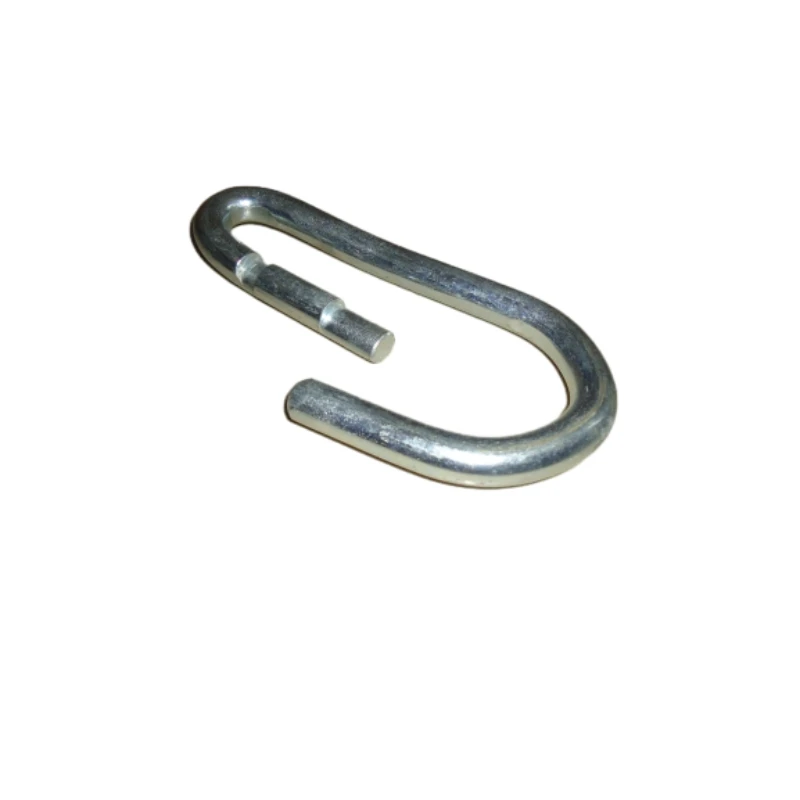
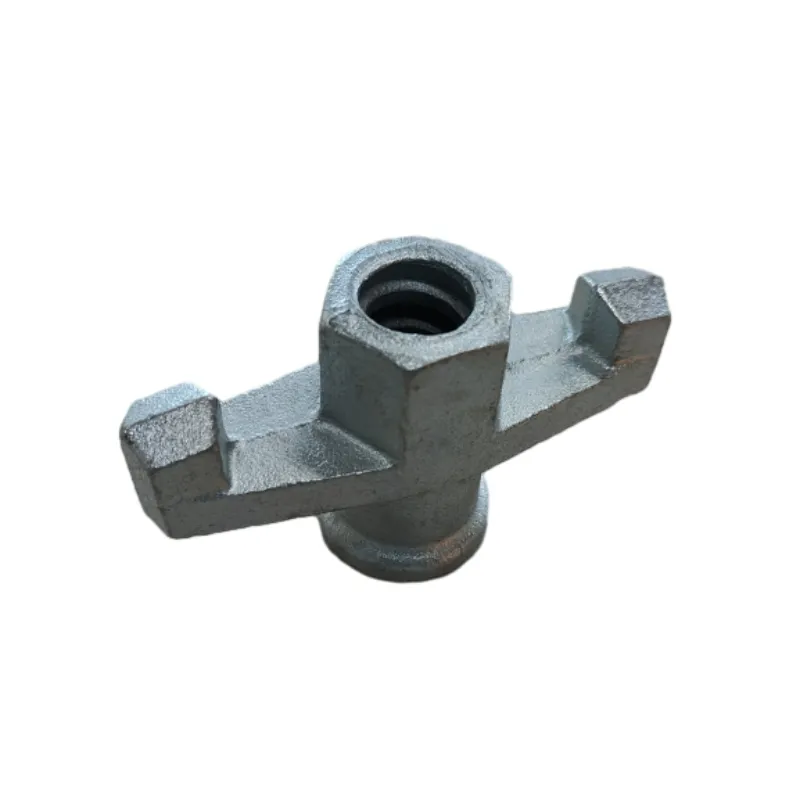
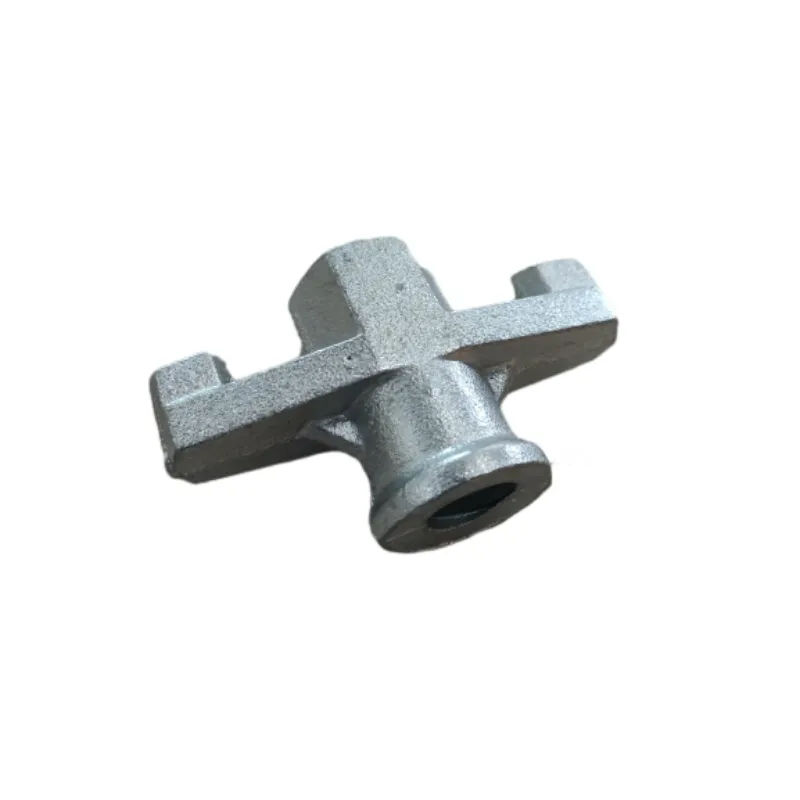
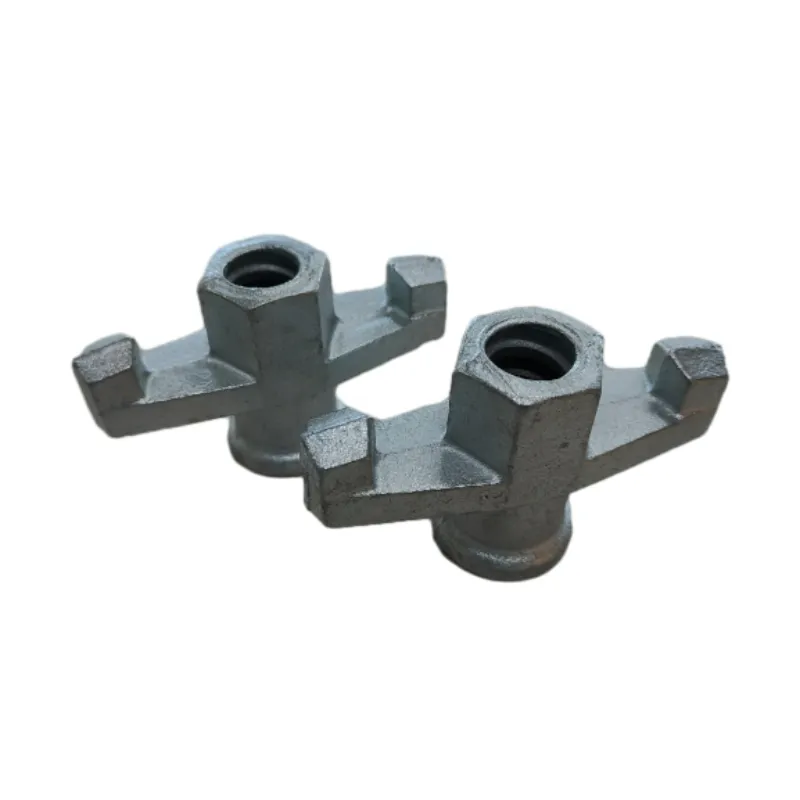
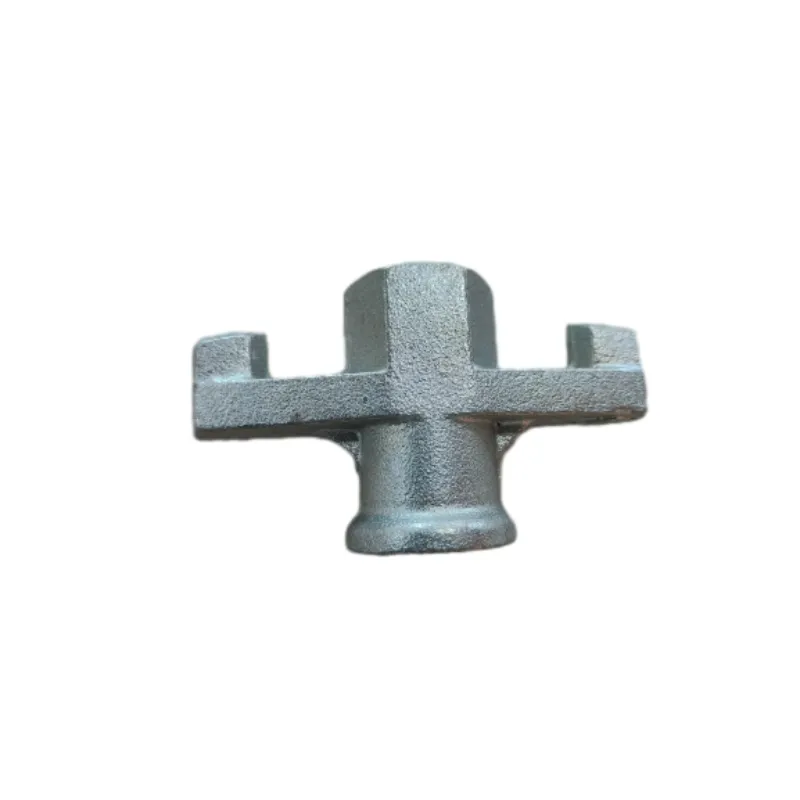
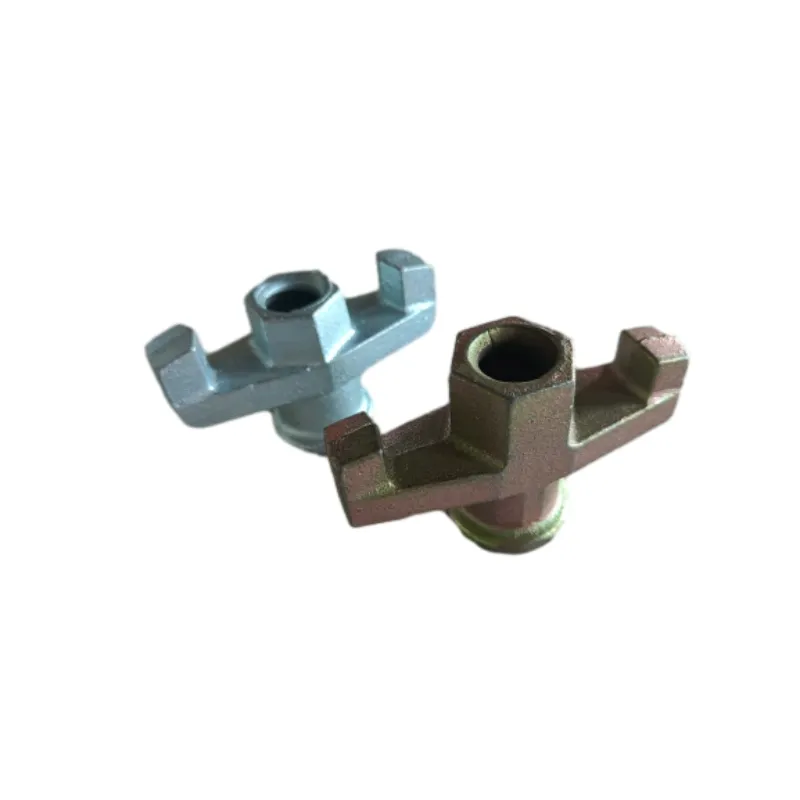
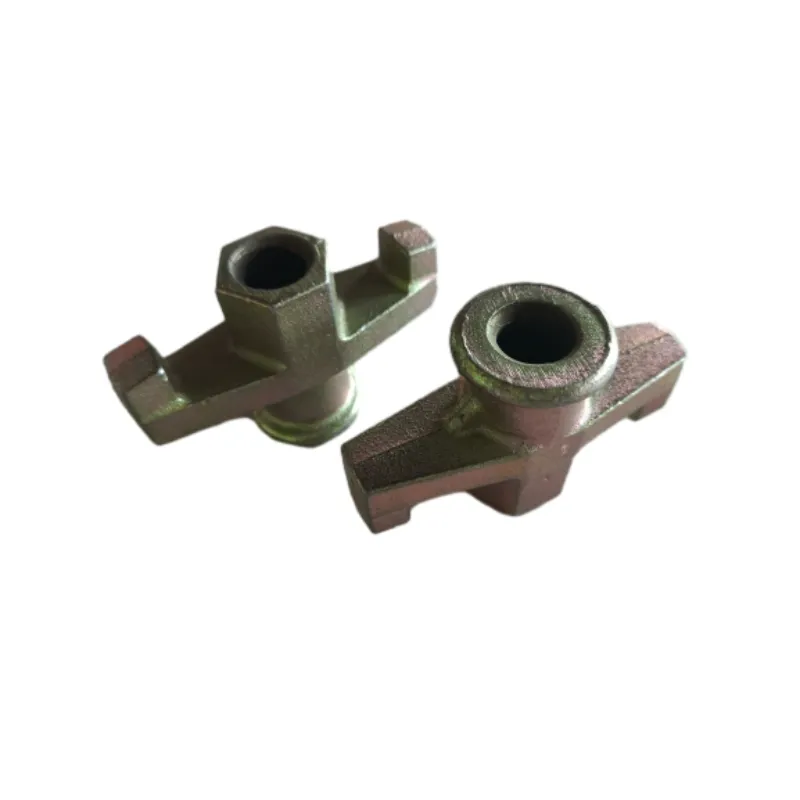
|
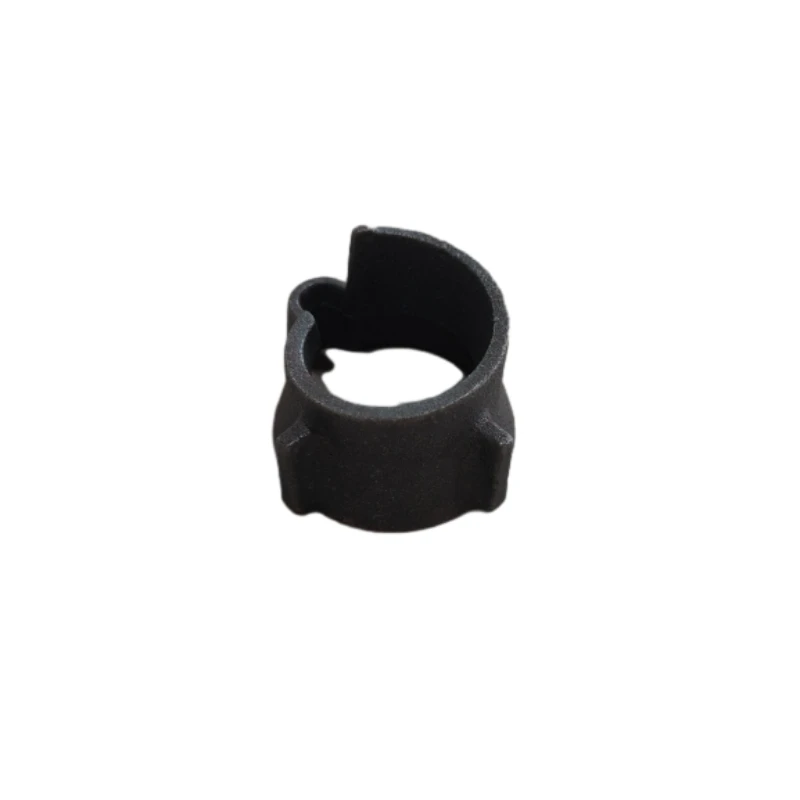
اندازه |
OD15/17mm*10mm |
|
وزن |
300 گرم |
|
مواد |
چدن داکتیل |
|
سطح |
طبیعت / گالوانیزه زرد / گالوانیزه برش |
|
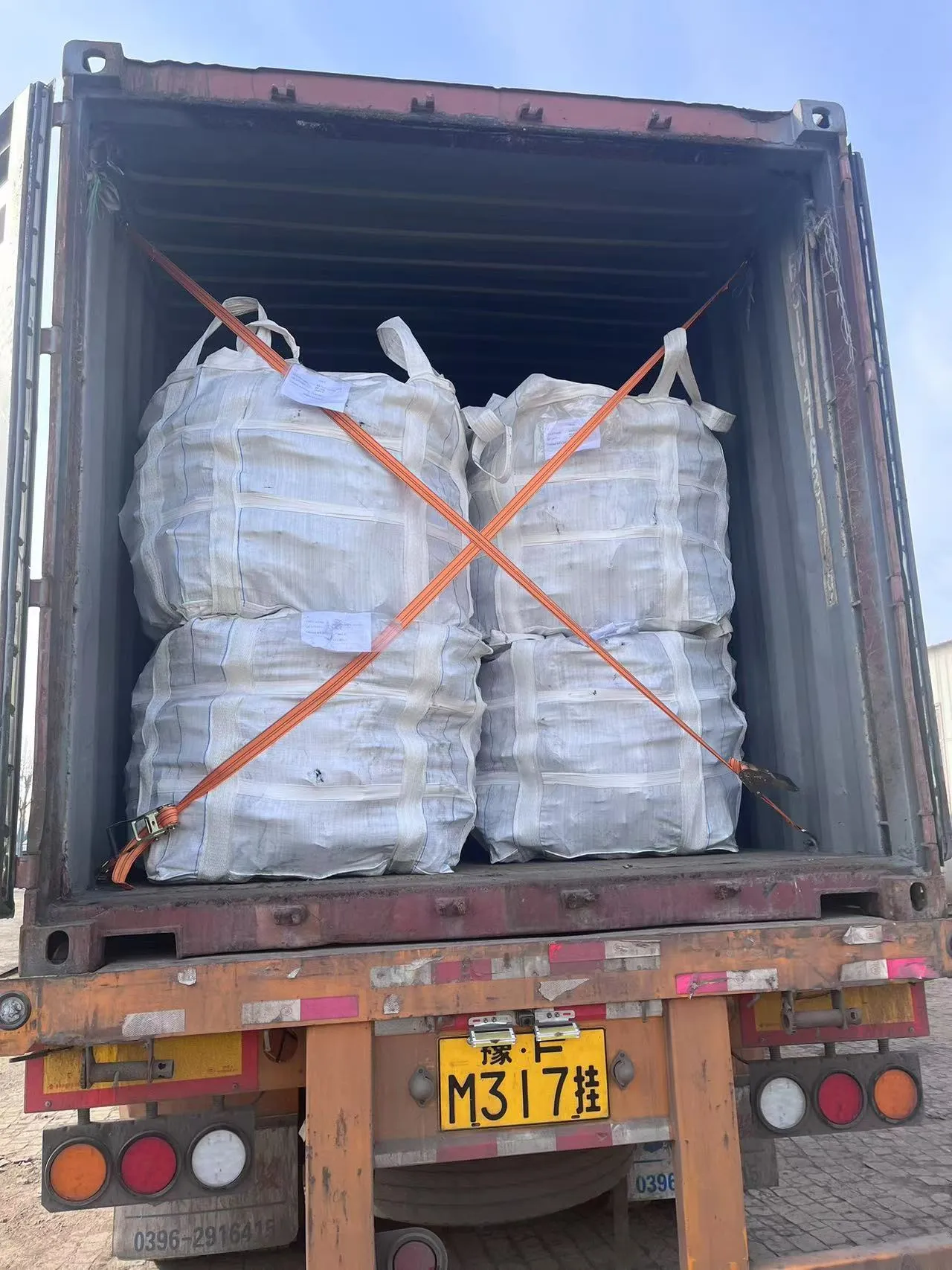
بسته ها |
کیسه / پالت / جعبه چوبی |
|
ظرفیت بارگیری |
بیش از 180KN |
|
برنامه |
سیستم میله بند قالب |
|
محصولات مرتبط |
میله کراوات قالبی، صفحه والر، مخروط فولادی، مهره شش گوش، گیره سریع و غیره |
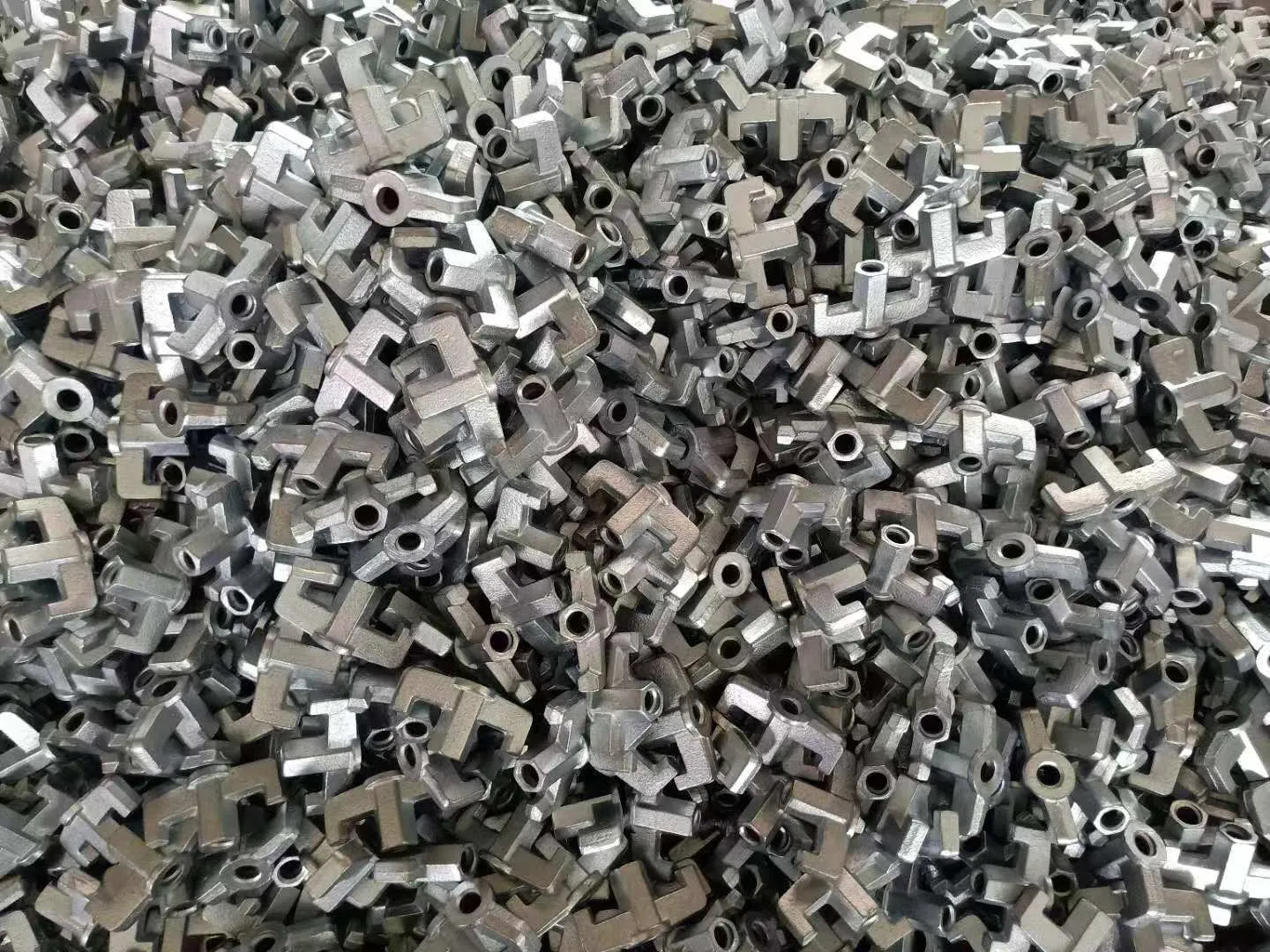
Structural Features of Formwork Wing Nuts
Formwork wing nuts are a crucial component in modern concrete formwork systems, designed to provide both ease of use and structural stability. At Cangzhou World Cup Trading Co., Ltd, our wing nuts are manufactured to meet international standards, ensuring that construction projects are completed efficiently and safely.
The primary structural feature of a formwork wing nut is its ergonomic “wing” design, which allows the nut to be tightened or loosened manually without the need for additional tools. The wings are carefully shaped to provide maximum leverage, reducing the physical effort required by workers. This is particularly useful in large construction projects where frequent assembly and disassembly of formwork systems are required.
Material quality is another key structural feature. Formwork wing nuts are typically made from high-strength steel, which provides excellent tensile strength and resistance to bending or deformation under heavy loads. This ensures that the nuts can securely hold formwork panels in place during the pouring and curing of concrete. The threads are precisely engineered to fit tie rods and adjustable props accurately, minimizing the risk of cross-threading or loosening during operation.
Additional features include corrosion-resistant coatings, such as black oxide or galvanization, which protect the wing nuts from rust and environmental degradation. This is particularly important for outdoor construction sites or areas with high humidity, where exposure to water and air could otherwise shorten the lifespan of the hardware.
Formwork wing nuts are also designed for load distribution. When properly installed on tie rods, the wings help evenly distribute the force applied by concrete pressure across the formwork system. This reduces stress on individual components and enhances overall stability, ensuring that the concrete sets correctly and maintains its intended shape.
In summary, the structural features of formwork wing nuts include ergonomic wings for manual operation, high-strength steel construction, precise threading, corrosion-resistant coatings, and load-distributing design. These features make wing nuts indispensable for safe, efficient, and durable concrete formwork systems.
Benefits of the Formwork Wing Nut
Formwork wing nuts offer a range of benefits that make them essential in modern construction projects. At Cangzhou World Cup Trading Co., Ltd, our wing nuts are designed to improve efficiency, enhance safety, and ensure high-quality concrete finishes.
One of the most significant benefits is manual, tool-free operation. The wing design allows workers to tighten or loosen the nut by hand, speeding up installation and reducing labor costs. This feature is especially valuable in scaffolding and formwork systems where frequent adjustments are necessary. Quick assembly and disassembly save time and minimize disruptions during construction.
Another benefit is enhanced stability and load-bearing capacity. When used with tie rods or adjustable props, wing nuts secure formwork panels against the lateral pressure of fresh concrete. This prevents panel shifting, bulging, or failure, ensuring that concrete structures maintain the correct shape and dimensions. High-quality wing nuts from Cangzhou World Cup Trading Co., Ltd are made of durable steel and can withstand heavy loads, contributing to overall structural safety.
Durability and corrosion resistance are additional advantages. Wing nuts are often coated to resist rust and environmental damage, making them suitable for both indoor and outdoor applications. They can be reused multiple times, which improves cost efficiency and reduces waste in large-scale projects.
Ergonomically, the wing design also provides even force distribution, reducing the stress on the tie rods and other formwork components. This minimizes the risk of deformation or localized failure, further enhancing safety and reliability.
Finally, wing nuts support versatility in various applications, including concrete walls, slabs, columns, scaffolding systems, and temporary structures. Their adaptability ensures that contractors can use them across multiple projects with consistent performance and safety standards.
In conclusion, the benefits of formwork wing nuts include tool-free operation, enhanced stability, durability, corrosion resistance, even force distribution, and versatility. These features make them indispensable for efficient and safe concrete formwork construction.
Formwork Wing Nut Applications
Formwork wing nuts are widely used across the construction industry due to their versatility and ease of use. At Cangzhou World Cup Trading Co., Ltd, our wing nuts are designed to provide secure and reliable fastening for a variety of concrete formwork and scaffolding systems.
The most common application of wing nuts is in concrete formwork systems. They are paired with tie rods and adjustable props to secure panels during the pouring and curing of concrete. The winged design allows workers to tighten or release the nuts quickly by hand, which speeds up installation and reduces labor costs. This is especially important for high-rise buildings, bridges, and industrial projects where efficiency and safety are critical.
Wing nuts are also essential in scaffolding and adjustable prop systems. They allow for fine-tuning the height and alignment of props, ensuring that the structure is level and stable. This makes them suitable for temporary structures, suspended platforms, and other applications where frequent adjustments are required.
Another key application is in modular and reusable formwork systems. Formwork wing nuts are durable and can withstand repeated use without losing performance. Their corrosion-resistant coatings make them ideal for outdoor environments, including high-humidity or wet conditions, ensuring long-term reliability.
In addition, wing nuts are often used in combination with other concrete accessories, such as rapid clamps and washers, to form a complete and secure fastening system. This integration ensures that the concrete sets with the correct alignment, minimizing defects and improving the quality of the finished structure.
At Cangzhou World Cup Trading Co., Ltd, our technical team helps clients select the appropriate wing nuts for different formwork systems and load requirements. This ensures maximum performance, safety, and efficiency for every project.
In summary, formwork wing nuts are applied in concrete formwork, scaffolding systems, adjustable props, and modular construction frameworks. Their ergonomic design, durability, and versatility make them essential for modern construction projects, supporting both safety and operational efficiency.
coil rod concrete forming
coil rod ties
form tie rod
formwork threaded tie bar
tie rod shuttering