Precision in structural integrity depends heavily on the components that hold a concrete system together. While primary materials like cement and rebar receive most of the attention, the hardware—the ties, nuts, and brackets—determines whether a formwork system remains stable under immense hydraulic pressure during a pour.
For procurement managers and site engineers, the challenge lies in identifying concrete accessories manufacturers who can balance strict dimensional tolerances with the corrosive demands of construction environments. The shift toward high-speed automated production and specialized surface treatments has redefined what is possible in terms of component longevity and installation speed.
This analysis examines the technical criteria for selecting high-performance formwork hardware, the impact of material selection on structural safety, and the operational frameworks used to evaluate manufacturing quality in the metal products industry.


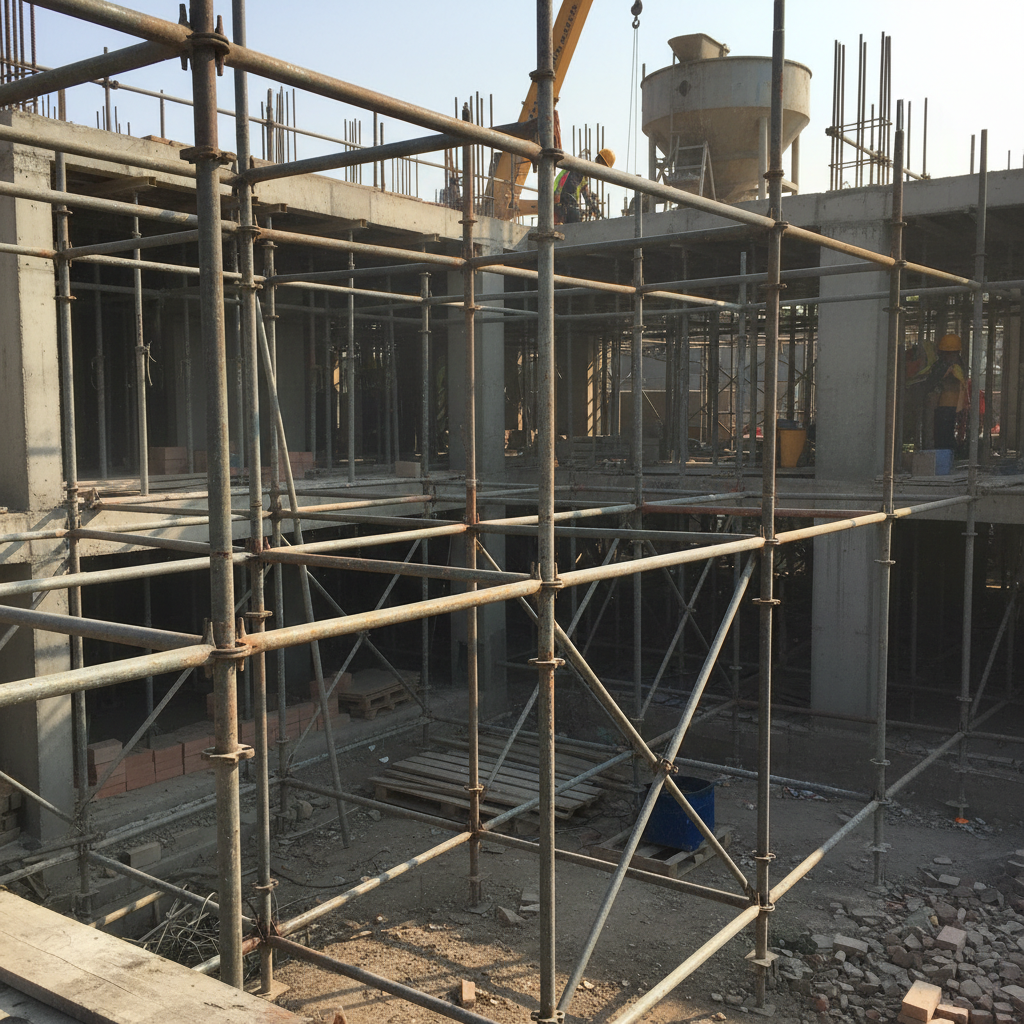
Concrete formwork acts as a temporary mold, but the actual containment of the liquid concrete is managed by a network of accessories. The primary objective is to counteract the lateral pressure exerted by the wet concrete, which increases as the pour height grows. Components such as Tie Rods and Wing Nuts form the primary tension line, while Waler Brackets and Push-Pull Props ensure the alignment remains perpendicular.
Failure in any single accessory—such as a stripped thread on a Tie Nut or a deformed Wedge and Pin—can lead to "blowouts," which are catastrophic structural failures during casting. Therefore, the role of specialized concrete accessories manufacturers is to provide hardware that ensures zero-slip connectivity under extreme load.
The choice of raw material directly dictates the lifespan and safety factor of the hardware. Low carbon steel is common for general-purpose accessories, but high-stress components like AL-Form Tie Systems often require middle or high carbon steel for increased tensile strength. For environments exposed to saltwater or chemicals, stainless steel (grades 304 or 316) is the standard to prevent premature corrosion.
Surface treatment is equally critical. Hot-dip galvanizing provides a thick protective layer for long-term reuse, whereas electronic polishing or zinc plating is used for components requiring tighter tolerances. Specialized coatings like Dacromet are often applied to hardware that must withstand aggressive weather conditions without sacrificing the precision of the threads.
Beyond the metal itself, the fabrication process—whether it be CNC milling, high-pressure die casting, or precision stamping—affects the grain structure of the part. Stamping, when executed with a high-speed punch process, allows for consistent mass production while maintaining a strict tolerance range of 0.02-0.1mm, which is essential for the interlocking nature of wedge-and-pin systems.
In the context of modular formwork, a deviation of even 0.5mm can lead to alignment errors that propagate across the entire wall section. This makes the tolerance of accessories the most critical metric for quality control. When components like the Adjustable Jack Base U Head are manufactured, the threading must be perfectly concentric to ensure the load is distributed evenly.
The structural reliability of a formwork system is not determined by the strongest component, but by the weakest link in the accessory chain. Precise tolerance (0.02-0.1mm) is the only way to ensure predictable load distribution across multiple connection points.
To achieve this, manufacturers utilize auto-production lines and precision die moulds. For example, the use of 150-ton press machinery ensures that stamped parts do not warp during fabrication. This mechanical consistency allows engineers to calculate the exact breaking point of a Tie Rod, providing a known safety margin for the construction site.
Different accessories contribute differently to the overall stability of the pour. While Tie Rods provide the primary tension, components like the AL-Formwork Waler Bracket manage the distribution of that tension across the panel. The effectiveness of these parts is often measured by their "Stability Index," which balances weight, ease of installation, and load capacity.
When evaluating the output of concrete accessories manufacturers, it is useful to look at how different categories perform across these indices. For instance, high-pressure die-casting parts generally offer higher precision but may have different ductility profiles compared to forged components.
In a typical high-rise industrial setting, the speed of formwork rotation is a key driver of profitability. This puts immense pressure on the hardware. For example, when using an AL-Form Tie System, the ease with which a Wedge and Pin can be removed without damaging the panel determines the cycle time. Hardware that requires excessive force to dismantle often suffers from deformation, reducing its reuse count.
Furthermore, on sites with high humidity or saline air, the failure of a simple Hex Nut or Bolt due to oxidation can delay a project. This is why manufacturers specializing in diverse surface treatments—such as powder coating or hot-dip galvanizing—are preferred for large-scale infrastructure projects. The goal is to ensure that the accessory remains functional through hundreds of pour-and-strip cycles.
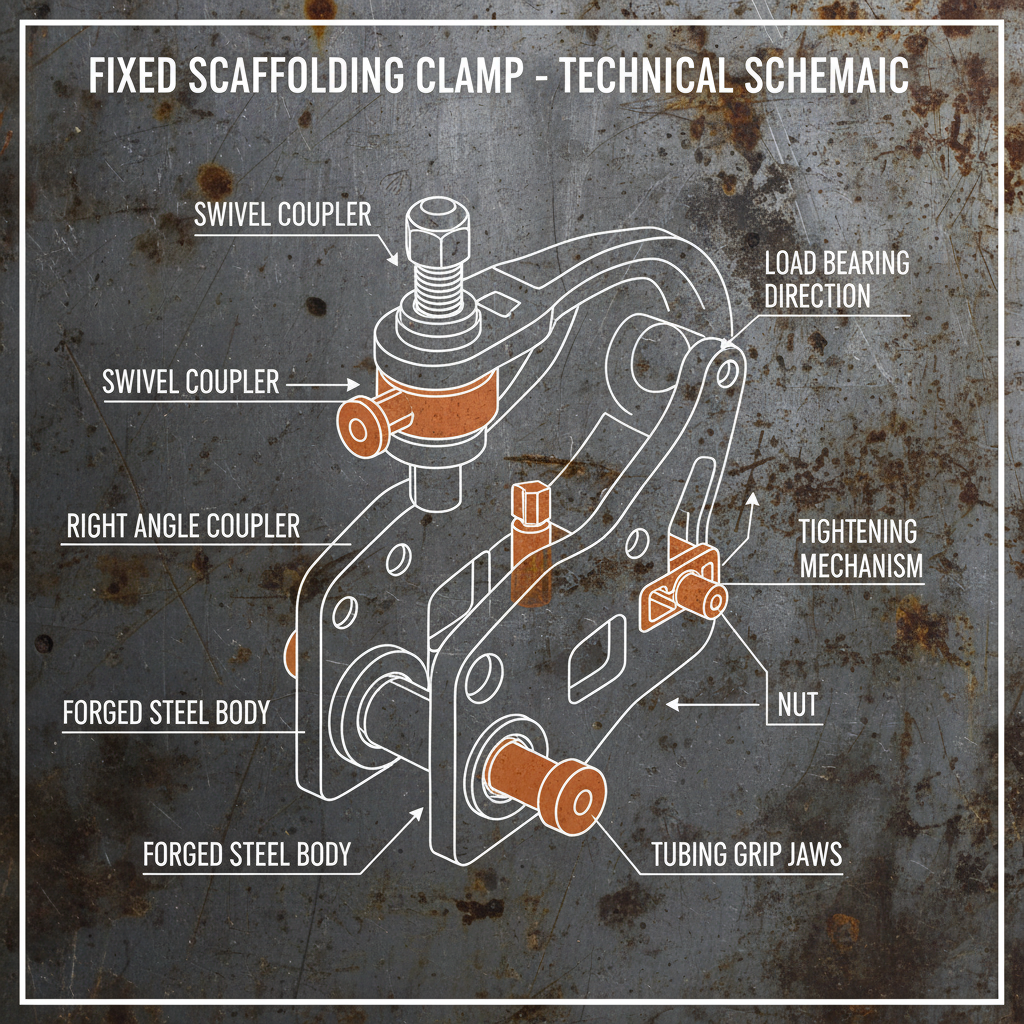
The industry is moving toward "intelligent" hardware—components designed for rapid assembly with visual cues for locking. We are seeing an increase in the use of lightweight but high-strength alloys to reduce the physical strain on workers during the assembly of Scaffolding Ringlock or Cuplock systems.
Automation in the factory is also evolving. The integration of AI-driven optical inspection systems allows manufacturers to detect deviations as small as 0.01mm in real-time during the stamping process. This reduces the scrap rate and ensures that every batch of Formwork Tie Nuts meets the exact specification required for international projects.
Sustainability is becoming a procurement requirement. There is a growing demand for accessories made from recycled high-carbon steel that maintain the same structural properties as virgin ore. This shift requires concrete accessories manufacturers to innovate their smelting and heat-treatment processes to ensure material consistency.
When auditing a supplier, a simple price-per-unit analysis is insufficient. A comprehensive evaluation must look at the technical capabilities of the facility, including the maximum press tonnage and the variety of available surface treatments. A manufacturer capable of handling both CNC milling and high-speed stamping can provide a more integrated solution for customized hardware.
The ability to customize raw materials—ranging from spring steel to titanium or specialized plastics—indicates a higher level of technical maturity. This flexibility allows for the creation of hybrid systems where certain parts are optimized for weight and others for absolute rigidity.
The following framework provides a qualitative comparison of the key factors that should be considered when selecting a long-term partner for concrete and scaffolding accessories.
| Evaluation Factor | Standard Requirement | High-Precision Requirement | Critical Impact |
|---|---|---|---|
| Dimensional Tolerance | ±0.5mm | 0.02-0.1mm | Panel Alignment |
| Surface Protection | Zinc Plating | Hot-dip Galvanizing | Corrosion Lifespan |
| Material Range | Carbon Steel | Stainless/Alloy Steel | Tensile Strength |
| Production Method | Manual Stamping | Auto-Production Lines | Batch Consistency |
| Quality Control | Random Sampling | 100% Optical Inspection | Failure Rate |
| Customization | Standard Sizes | OEM Technical Design | Project Specifics |
Quality is defined by the convergence of three factors: material grade, dimensional precision, and surface treatment. A high-quality accessory must maintain a strict tolerance (typically 0.02-0.1mm) to ensure seamless interlocking. Additionally, the use of heat-treated carbon steel or stainless steel ensures the part can withstand high tensile loads without permanent deformation, while treatments like hot-dip galvanizing prevent rust in harsh environments.
The tie system (such as the AL-Form Tie System) directly controls the pressure on the formwork panels. If the accessories are poorly manufactured or incorrectly spaced, the panels may bow, resulting in uneven wall surfaces. High-precision Tie Rods and Wing Nuts allow for tighter tensioning, which minimizes panel deflection and ensures a smoother, more professional concrete finish with fewer honeycombs or bulges.
Stainless steel (e.g., 304 or 316) should be selected for projects in highly corrosive environments, such as marine construction, chemical plants, or areas with high salinity. While galvanized carbon steel is excellent for most terrestrial construction due to its cost-effectiveness and strength, stainless steel provides superior oxidation resistance, eliminating the risk of rust-staining on the final concrete surface and extending the accessory's lifespan in extreme conditions.
The Wedge and Pin mechanism is the primary locking system for aluminum formwork. Its importance lies in its ability to provide a secure, vibration-resistant connection that can be quickly assembled and disassembled. If the wedge is not manufactured to precise tolerances, it may either be too loose (risking panel movement) or too tight (making stripping difficult and damaging the aluminum panels), which directly impacts both site safety and project timelines.
Look for three key indicators: the maximum press tonnage (e.g., 150 tons for heavy stamping), the use of automated production lines rather than manual processes, and the range of technical capabilities (CNC milling, lathe work, and die casting). A manufacturer that integrates these processes can maintain higher consistency across large batches and offer better customization for specialized project requirements without sacrificing delivery speed.
Yes, certain accessories now utilize high-density plastics (PP, Nylon, PVC) or aluminum alloys for components where weight reduction is more critical than absolute tensile strength. For example, some spacers or waterstops are made from PVC profiles. However, for primary load-bearing accessories like tie rods and jack bases, high-strength steel remains the industry standard due to its unmatched load-bearing capacity and structural predictability.
The stability of any concrete structure during its casting phase is only as reliable as the smallest piece of hardware holding the system together. By focusing on the intersection of material science, precision stamping, and advanced surface treatments, procurement teams can significantly reduce the risk of onsite failures and improve the overall efficiency of the formwork cycle.
Selecting the right partner among concrete accessories manufacturers requires a shift from price-centric buying to technical-centric auditing. Investing in hardware with verified tolerances and superior corrosion resistance not only ensures structural safety but also maximizes the return on investment through increased component reusability.