- Phone: +86 132 8320 1810
- Email: annie@wrkgroup.ltd
-
- Afrikaans
- Albanian
- Amharic
- Arabic
- Armenian
- Azerbaijani
- Basque
- Belarusian
- Bengali
- Bosnian
- Bulgarian
- Catalan
- Cebuano
- China
- China (Taiwan)
- Corsican
- Croatian
- Czech
- Danish
- Dutch
- English
- Esperanto
- Estonian
- Finnish
- French
- Frisian
- Galician
- Georgian
- German
- Greek
- Gujarati
- Haitian Creole
- hausa
- hawaiian
- Hebrew
- Hindi
- Miao
- Indonesian
- Italian
- Japanese
- Javanese
- Malay
- Persian
- Portuguese
- Punjabi
- Russian
- Spanish
- Swahili
- Telugu
- Vietnamese

Sep . 08, 2025 17:39 Back To List
Material Science Behind Durable Formwork Wing Nut Fasteners
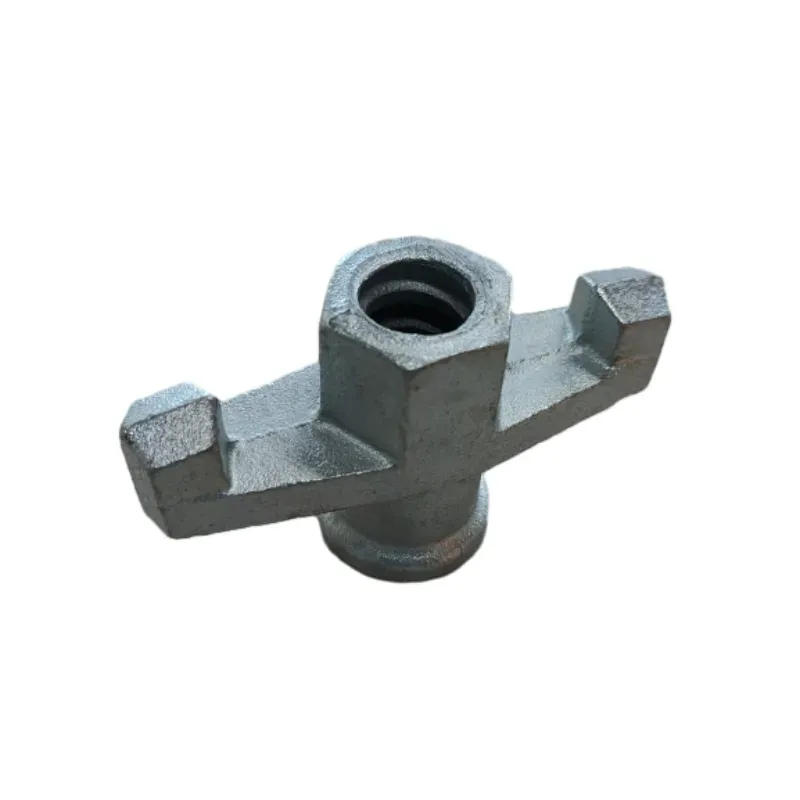
In the high-stakes world of concrete construction, formwork systems bear the immense weight and pressure of liquid concrete. While beams, panels, and ties grab attention, the humble formwork wing nut and formwork tie rod wing nut are the silent workhorses ensuring structural integrity and safety. Their failure can lead to catastrophic blowouts, costly delays, and compromised finishes. For wholesalers supplying these critical components, understanding material selection and corrosion resistance isn't just technical jargon; it's fundamental to delivering value, reliability, and safety to construction partners worldwide. Choosing the right metal for the job dictates longevity, reusability, safety margins, and ultimately, the project's bottom line. This deep dive explores the metallurgy and environmental factors defining these essential fasteners.
Understanding the Corrosion Challenge in Concrete Formwork Wing Nut
Formwork wing nuts operate in one of construction's harshest environments. Constantly exposed to moisture, highly alkaline fresh concrete , de-icing salts, marine spray, atmospheric pollutants, and physical abrasion during stripping and cleaning, these components face relentless attack. Corrosion manifests as rust, pitting, thread degradation, and ultimately, loss of tensile strength and clamping force. The consequences are severe:
- Reduced Clamping Force:Rust creates uneven surfaces, preventing proper seating and reducing the friction grip essential for holdingformwork securely under hydrostatic pressure. A corroded formwork tie rod wing nut can loosen under vibration.
- Thread Seizure & Galling:Corrosion products jam threads, making nuts impossible to turn without excessive force, damaging threads, or shearing components. This is a frequent headache with formwork anchor nutsembedded in concrete faces.
- Premature Failure:Progressive corrosion weakens the metal cross-section. A severely rusted formwork wing nutcan snap during tightening or under load, potentially causing formwork collapse.
- Increased Labor & Downtime:Seized or damaged nuts slow down formwork erection and striking significantly. Cleaning heavily corroded components is time-consuming and often ineffective.
- Concrete Staining:Rust bleed from corroded fasteners, especially formwork anchor nutsnear the surface, can stain finished concrete, requiring costly remediation.
For wholesalers, sourcing fasteners with appropriate corrosion resistance is paramount to minimize returns, warranty claims, and reputational damage, while maximizing the number of safe reuse cycles for their clients.
Decoding Material Options: From Formwork Wing Nuts Carbon Steel to Stainless Alloys
The choice of material directly dictates corrosion resistance, cost, strength, and suitability for specific environments. Wholesale buyers must understand these core options:
- Carbon Steel (Unprotected):The most economical base material. However, it offers minimal inherentcorrosion resistance and will rust rapidly when exposed to moisture and alkaline concrete. Suitable only for very short-term, indoor projects in completely dry conditions – a rarity. Not recommended for general formwork tie rod wing nuts where reliability and reuse are expected.
- Electro-Galvanized Steel:A thinner zinc coating applied electrolytically. Offers only cosmetic protection and very limited corrosion resistance. Unsuitable for the demands of formwork anchor nuts or any component facing significant exposure. Avoid for structural formwork fasteners.
- Stainless Steel :The premium choice for extreme environments. Offers excellent inherent corrosion resistancedue to a protective chromium oxide layer.
Matching Formwork Anchor Nuts Material to Application & Environment
Selecting the optimal material isn't one-size-fits-all. Wholesalers must guide clients based on project specifics:
- Standard Building Construction (Inland/Urban):Hot-Dip Galvanized Steel remains the most cost-effective and reliable choice for the vast majority of formwork anchor nuts. Provides sufficient protection for numerous reuses.
- Coastal/Marine Environments:Salt spray drastically accelerates corrosion. Stainless Steel 316 is strongly recommended, especially for formwork anchor nuts and any exposed formwork tie rod wing nut. HDG will corrode much faster here.
- Infrastructure Projects (Bridges, Tunnels):Often involve exposure to de-icing salts and high humidity. Stainless Steel 316is preferred for all critical fasteners, particularly formwork anchor nuts embedded near surfaces. HDG might suffice for internal components depending on duration.
- Industrial Zones (Chemical Exposure):Airborne pollutants can be highly corrosive. Stainless Steel 316offers the necessary resilience for formwork tie rod wing nuts.
- Maximizing Reuse Cycles & Asset Life:Projects prioritizing long-term investment in formwork systems benefit immensely from Stainless Steel. While the initial cost is higher, the vastly extended lifespan and minimal maintenance offset this over time, especially for high-turnover formwork wing nuts and formwork tie rod wing nuts.
FAQ: Formwork Wing Nut Fastener Wholesalers
What are the key differences between Hot-Dip Galvanized and Stainless Steel for formwork wing nuts?
HDG relies on a sacrificial zinc coating protecting underlying carbon steel. It's cost-effective for general use but the coating can wear or corrode over time. Stainless Steel is inherently corrosion-resistant throughout the material due to its chromium content. It's more expensive initially but offers superior longevity, especially in harsh environments, and requires no sacrificial coating maintenance. Stainless is generally stronger and more resistant to thread galling.
When is Stainless Steel 316 absolutely necessary for formwork anchor nuts?
Stainless Steel 316 is essential for formwork anchor nuts whenever they will be exposed to chlorides. This includes marine environments, areas using de-icing salts, swimming pools, wastewater treatment plants, and highly polluted industrial areas. Its molybdenum content provides critical resistance to pitting and crevice corrosion in these aggressive conditions, preventing failure of the embedded anchor point.
Can Hot-Dip Galvanized formwork wing nuts be reused? How many times?
Yes, HDG formwork wing nuts are specifically designed for reuse. The number of safe reuse cycles depends heavily on the environment, cleaning procedures, and handling. In average conditions, dozens of reuses are possible. Key factors include preventing deep scratches that breach the zinc layer, thorough cleaning after each use to remove concrete residue (which is alkaline and can degrade zinc over time), and proper storage in a dry environment. Regular inspection for significant rust or thread damage is crucial.
How does concrete alkalinity affect different formwork wing nut materials?
Fresh concrete is highly alkaline . While this passivates steel to some degree initially, it can slowly degrade zinc coatings on HDG fasteners, especially if concrete residue is left on and remains damp. Carbon steel rusts rapidly. Stainless steels (304 and 316) are highly resistant. Their passive chromium oxide layer remains stable in alkaline conditions, making them excellent choices for prolonged contact or where cleaning might be delayed. However, trapped, damp concrete residue can still create corrosive micro-environments on any material if not cleaned.
Are there weight or strength differences between Galvanized and Stainless Steel formwork tie rod wing nuts?
Generally, Stainless Steel has a higher tensile and yield strength than typical carbon steel used for HDG fasteners. This means a stainless formwork tie rod wing nut can often handle slightly higher loads or the same load with a marginally smaller size. However, well-manufactured HDG nuts meet standard strength requirements for formwork. The weight difference is usually negligible for comparable sizes. The primary advantage of stainless isn't typically strength per se, but maintaining that strength reliably over countless cycles in corrosive environments due to superior corrosion resistance.
The integrity of any concrete structure begins with the integrity of the formwork holding it. Formwork wing nuts though small, play an outsized role in safety, efficiency, and cost-effectiveness. For wholesalers, mastery of material selection and corrosion resistance is non-negotiable. Recommending carbon steel invites failure. Hot-Dip Galvanized Steel delivers proven performance for the majority of applications. Stainless Steel 304 and 316 provide the ultimate defense where conditions are extreme or asset lifespan is paramount. Understanding the specific environmental threats – from coastal salt to industrial acids to concrete's own chemistry – allows for precise matching of fastener material to project demands. This knowledge translates directly into supplying clients with durable, reliable components that withstand the rigors of the job site, maximize reuse, minimize downtime, and most importantly, uphold the highest standards of safety on every pour. Investing in the right material science is investing in the foundation of successful construction.
World Cup Trading CO., LTD are a finest manufacturer and supplier of scaffolding & formwork with accessories, Construction equipments, Metal Products, and building container house etc. WRK family factories mainly produce ringlock scaffolding, steel props, jack base, Tie Rod, Rapid Clamps, BFD clamps, types of metal parts (including high-quality formwork tie rod wing nuts in various materials), folding container house for building companies. We cooperated with worldwide business partners, USA, Canada, Europe Union, Brazil, Australia, Africa, Middle-East, and Southeast Asia. We try our best to supply quickly and reliably products and service to the worldwide clients, focusing on providing wholesale solutions that meet diverse environmental and performance requirements.
Latest News
-
High Quality Drywall Corner Metal Strip for Perfect Wall EdgesNewsApr.16,2026
-
Corner Metal for Drywall Guide for Perfect Professional EdgesNewsApr.09,2026
-
Comprehensive Guide to Corner Metal Drywall Installation and Material ChoicesNewsApr.07,2026
-
Comprehensive Guide to Corner Metal Bead for Durable Construction ProjectsNewsApr.04,2026
-
Comprehensive Guide to Corner Drywall Metal Installation and SelectionNewsMar.31,2026
-
Understanding Corner Bit Metal Applications and Sourcing for Robust StructuresNewsMar.28,2026