You know, after running around construction sites all year, smelling concrete dust and steel, you start to see things differently. Lately, everyone’s talking about pre-fabricated scaffolding, modular construction… it’s all about speed, right? But speed isn’t everything. I've seen projects rushed, corners cut, and honestly, it usually ends in a headache. scaffold tube suppliers are being pushed to deliver faster, cheaper, but the quality has to hold. It really does.
What’s really got my attention lately is the demand for lighter-weight, higher-strength steel. Everyone wants to save on transport costs and make assembly easier. It sounds good on paper, but have you noticed how some of these new alloys are… brittle? They look shiny and strong, but they don't feel right when you're bending them. It's a gut feeling, I guess, years of experience. A good scaffold tube needs to have a bit of give, you know?
And frankly, the biggest challenge isn't the materials themselves, it’s getting everyone on the same page about specifications. I swear, every engineer has their own idea of what 'acceptable' means.
The Shifting Landscape of Scaffold Tube Suppliers
To be honest, the whole supply chain has been… interesting lately. There's a lot of consolidation happening. Smaller scaffold tube suppliers are getting swallowed up by bigger players, which means less competition and, often, less flexibility. You used to be able to call up a local supplier and get exactly what you needed, even if it was a weird, custom order. Now, it’s all about volume discounts and standardized sizes. It’s efficient, sure, but it doesn't always solve the problem on site.
I encountered a situation at a factory in Tianjin last time, where they were relying solely on one supplier for all their scaffold tubes. When that supplier had a production issue, the whole project ground to a halt. Diversification, that’s the key. Don’t put all your eggs in one basket, no matter how good the price looks.
Design Pitfalls and Common Mistakes
Strangely enough, a lot of engineers don't really understand how scaffold tubes are used in the real world. They design these systems based on calculations and simulations, which is fine, but they often forget about things like wear and tear, corrosion, and the sheer clumsiness of construction workers. I’ve seen designs that look great on paper but are a nightmare to assemble on-site.
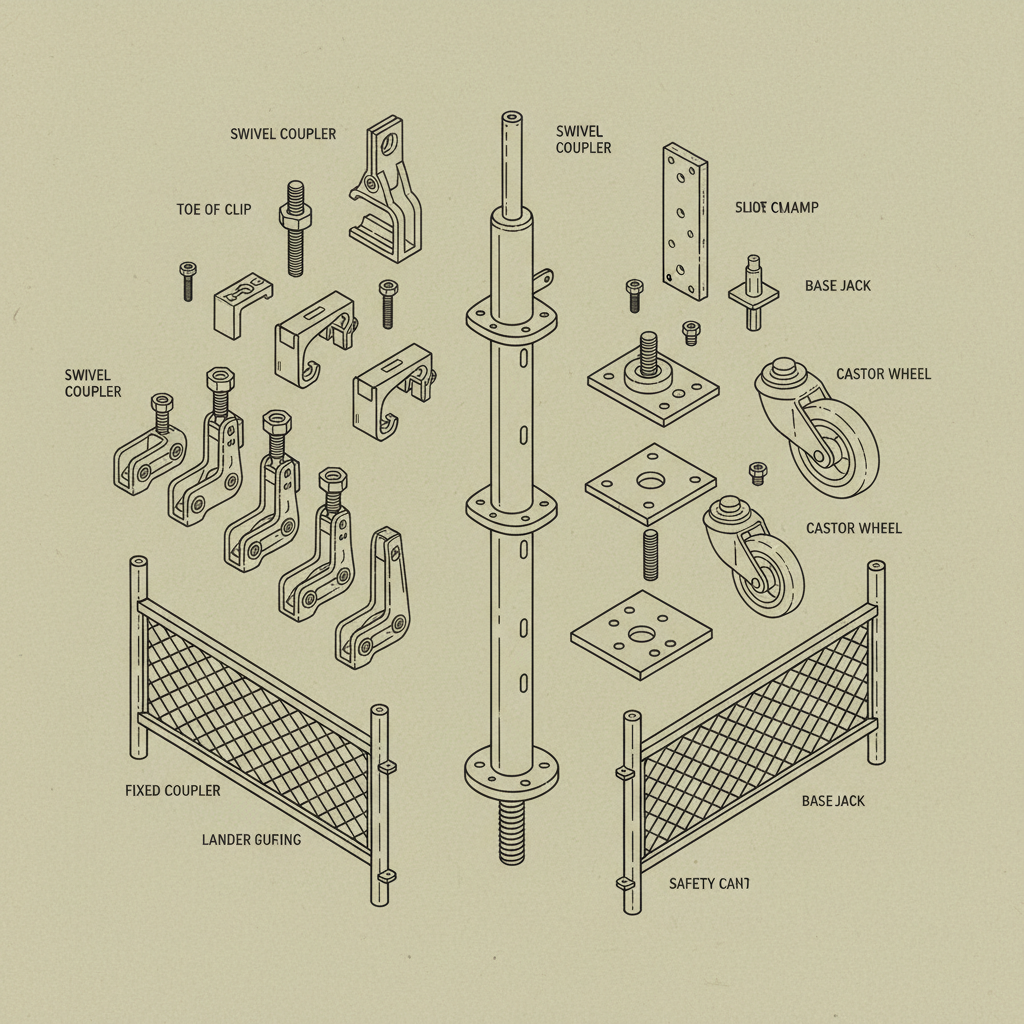
A common mistake is underestimating the importance of connection points. Those clamps, those bolts… they take a beating. If they’re not strong enough, or if they're difficult to adjust, you're asking for trouble. And don't even get me started on compatibility issues. Different manufacturers use different standards, which means you end up with a mishmash of parts that don't quite fit together.
It’s crucial to involve someone with practical experience in the design process. Someone who’s actually been up on a scaffold, tightening bolts in the rain. That’s where the real insights come from.
The Heart of the Matter: Materials and Handling
The steel itself… that’s where it all starts. Most of it is ERW (Electric Resistance Welded) steel, which is fine for most applications. But you need to check the weld quality. A bad weld can fail under stress, and that’s not something you want to discover when you’re 50 feet in the air. You can smell a bad weld – a sort of acrid, burnt smell. It takes years to develop that sense, though.
Galvanized steel is the go-to for corrosion resistance, but the galvanization process itself can sometimes create weak spots. I’ve seen tubes where the galvanization is too thick, making it difficult to get a good clamp connection. And then there’s stainless steel… expensive, but worth it in harsh environments, like near the ocean. It feels different, smoother, almost… luxurious. Anyway, I think, the handling of these materials is vital. Don't just toss them around.
Proper storage is essential too. Stack them neatly, protect them from the elements, and make sure they’re not exposed to excessive heat. Heat can weaken the steel, and you don’t want that. And for God’s sake, don’t store them directly on the ground. Moisture will cause rust, and you’ll have a mess on your hands.
Real-World Testing: Beyond the Lab
Lab tests are important, sure. Tensile strength, yield strength, all that stuff. But they don’t tell you how a scaffold tube will perform in a real-world scenario. I prefer to see them tested under realistic conditions. Load them up with weight, expose them to harsh weather, and see how they hold up.
We’ve started doing more on-site drop tests. Just dropping a tube from a certain height onto a concrete floor. It sounds brutal, but it’s a good way to identify weak points. Later… Forget it, I won’t mention the time we accidentally dropped one on a foreman's foot.
Scaffold Tube Supplier Performance - Key Metrics
How Users Actually Interact with Scaffold Tubes
You know, what engineers think happens on site and what actually happens are often two different things. They assume workers will follow the instructions to the letter, but let’s be real, they'll find the quickest, easiest way to do things, even if it means bending the rules a little. They'll use the tubes as levers, as makeshift supports, as anything but what they were originally intended for.
That's why it’s crucial to design systems that are forgiving, that can withstand a bit of abuse. And it’s important to train the workers properly. Show them how to assemble the system correctly, and explain the risks of cutting corners. It’s not just about safety; it’s about efficiency too. A well-trained worker will get the job done faster and with fewer errors.
Advantages, Disadvantages, and the Balancing Act
The advantages are obvious: strength, versatility, relatively low cost. A good scaffold tube supplier can provide you with a system that can be adapted to almost any situation. But there are disadvantages too. It can be heavy and cumbersome to transport and assemble. It requires skilled labor. And it’s not always the most aesthetically pleasing solution.
It’s all about finding the right balance. Sometimes, you need the brute strength of steel. Other times, you can get away with a lighter-weight alternative. It depends on the specific application, the budget, and the time constraints.
Customization and Unique Applications
I've seen some incredible things done with scaffold tubes. One client, a small boss in Shenzhen who makes smart home devices, last month insisted on changing the interface to – a completely unnecessary change that added cost and complexity. The result? Delays, frustration, and a lot of wasted money. It's a good reminder that not all customizations are worth it.
But sometimes, customization is essential. We had a project at a power plant where they needed a specialized scaffold system to access a particularly difficult area. The standard tubes just wouldn’t fit. We worked with the supplier to create custom lengths and angles, and it saved them weeks of work.
Really, I think, the key is to be open to new ideas, but also to be realistic about the costs and benefits.
A Quick Overview of Key Scaffold Tube Supplier Characteristics
| Supplier Responsiveness |
Material Quality Control |
Pricing Competitiveness |
Customization Capabilities |
| Excellent - Quick to respond to inquiries |
High - Rigorous testing procedures |
Moderate - Slightly higher prices |
Limited - Standard sizes only |
| Good - Responds within 24 hours |
Average - Standard quality control |
High - Very competitive pricing |
Moderate - Can accommodate minor changes |
| Average - Slow response times |
Low - Minimal quality control |
Low - Highest prices |
High - Full customization options |
| Poor - Difficult to reach |
Very Low - No quality control |
Moderate - Average pricing |
None - No customization available |
| Good - Prompt and helpful |
High - Certified materials |
Moderate - Fair prices |
Moderate - Limited customization available |
| Excellent - Proactive communication |
High - Independent lab testing |
High - Bulk discounts available |
High - Full bespoke design service |
FAQS
Lead times for custom orders can vary significantly depending on the complexity of the design, the quantity required, and the supplier’s current workload. Generally, you can expect a minimum of 2-3 weeks for simpler modifications, and potentially 6-8 weeks or more for completely bespoke designs. It’s always best to check with the supplier directly and get a firm quote and delivery schedule.
Ensuring safety starts with choosing a reputable supplier who adheres to recognized industry standards like EN 12811. Always request certification documentation and verify that the tubes have been tested for load-bearing capacity and material integrity. Regular inspection of the tubes on-site is also crucial, looking for signs of damage, corrosion, or wear and tear.
The key to preventing corrosion is keeping the tubes dry and protected from the elements. Store them indoors if possible, or cover them with a waterproof tarp if outdoor storage is unavoidable. Elevate them off the ground using pallets or supports to prevent moisture accumulation. Regularly inspect the tubes for signs of rust and apply a protective coating if necessary.
Yes, there are different types of galvanization, primarily hot-dip galvanizing and electrogalvanizing. Hot-dip galvanizing generally provides a thicker, more durable coating, offering better corrosion protection. Electrogalvanizing is thinner and provides less protection, but it often results in a smoother finish. For most scaffold tube applications, hot-dip galvanizing is the preferred choice.
The lifespan of galvanized scaffold tubes depends on the environment and how well they are maintained. In relatively mild environments with regular inspection and maintenance, they can last for 15-20 years or more. However, in harsh environments – such as coastal areas or industrial sites with corrosive fumes – the lifespan may be significantly shorter.
Choosing the right diameter depends on the load-bearing requirements of your project. Larger diameters generally provide greater strength and stability. A structural engineer should be consulted to determine the appropriate diameter based on the specific application and anticipated loads. Remember to factor in wind loads, live loads, and dead loads when making your calculations.
Conclusion
Ultimately, we’ve talked about materials, design, testing, and customization. But all that engineering and all those specifications come down to one thing: how well it performs on the jobsite. A fancy design or a high-tech alloy won’t matter if it’s difficult to use, unreliable, or unsafe. Finding the right scaffold tube suppliers is about more than just getting a good price; it's about finding a partner who understands the realities of construction.
I’ve learned over the years that there’s no substitute for experience. The best way to evaluate a scaffold system is to get your hands dirty, to climb up there and see how it feels, and to talk to the workers who are actually using it. Ultimately, whether this thing works or not, the worker will know the moment he tightens the screw.