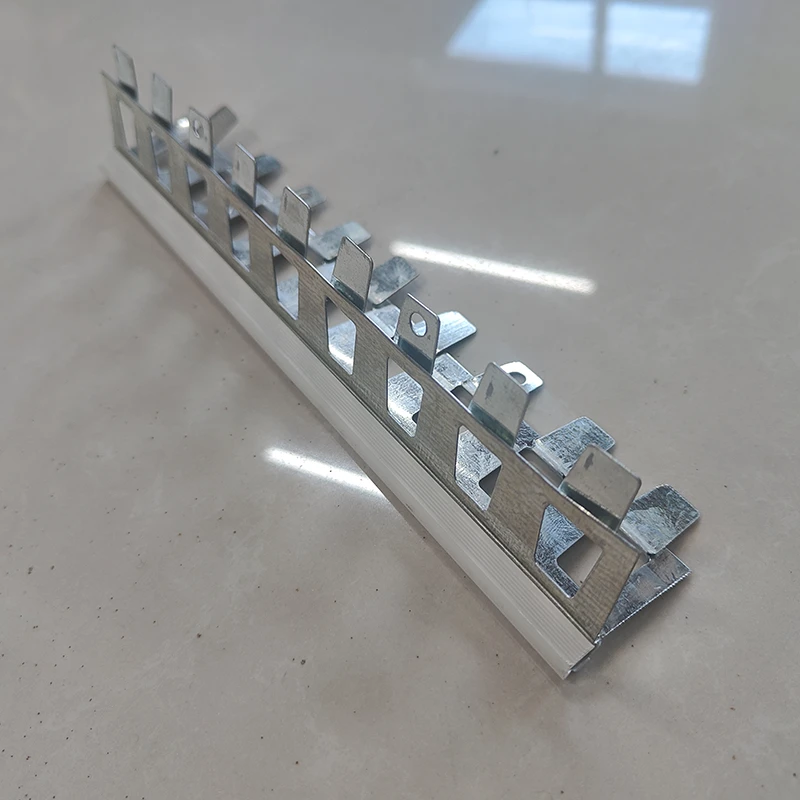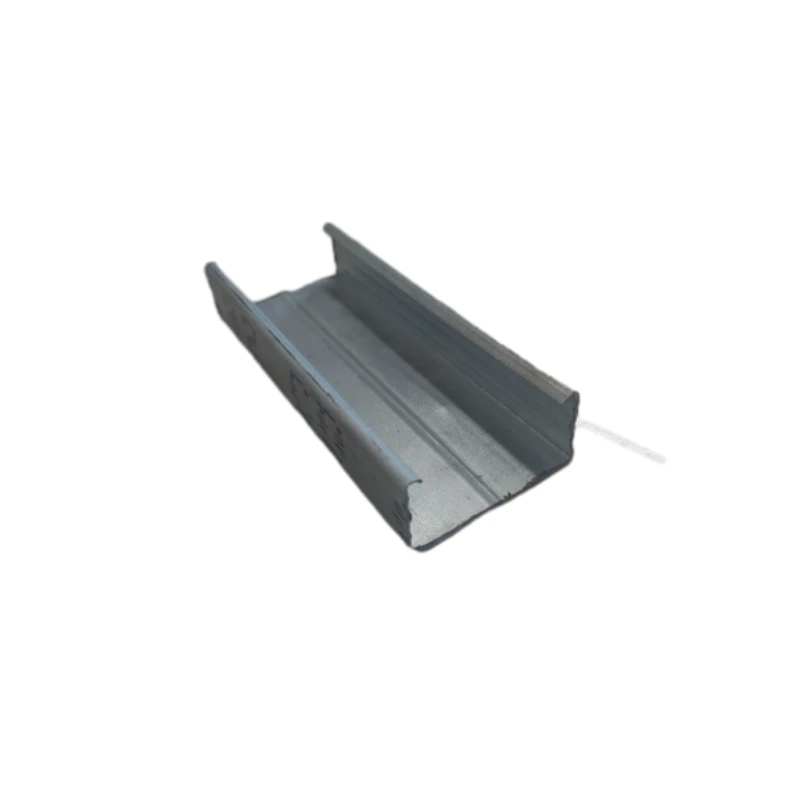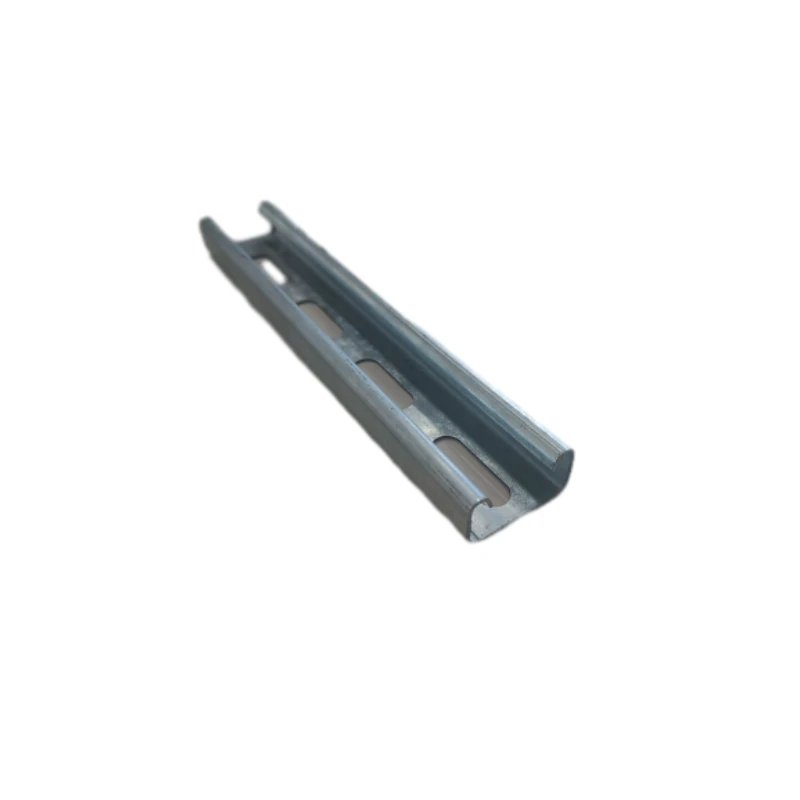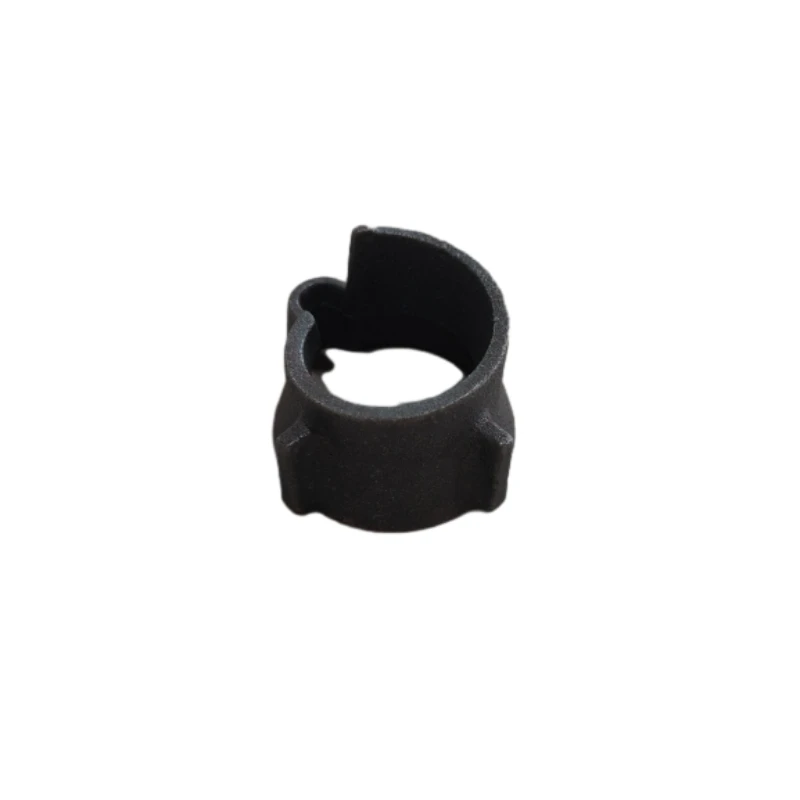
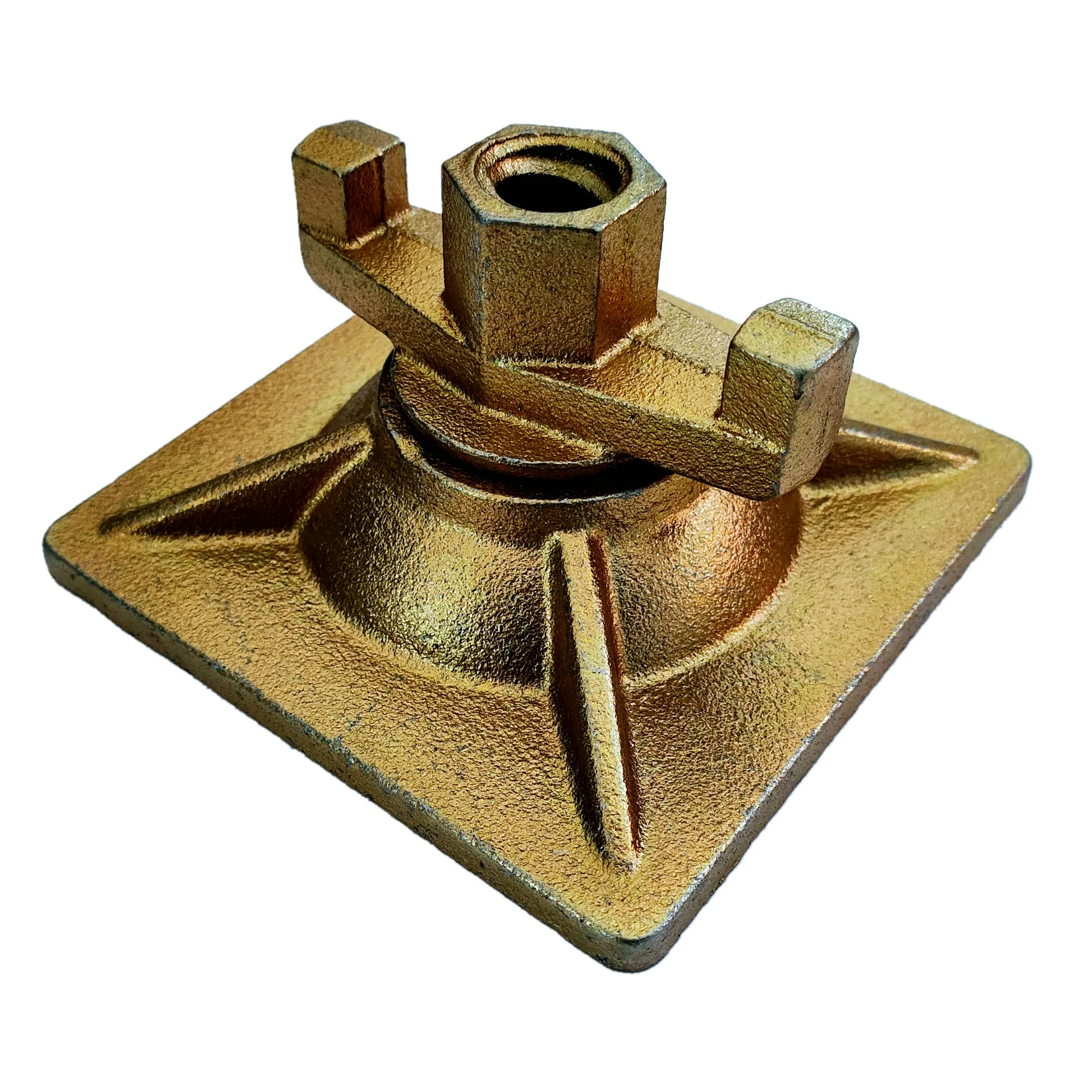
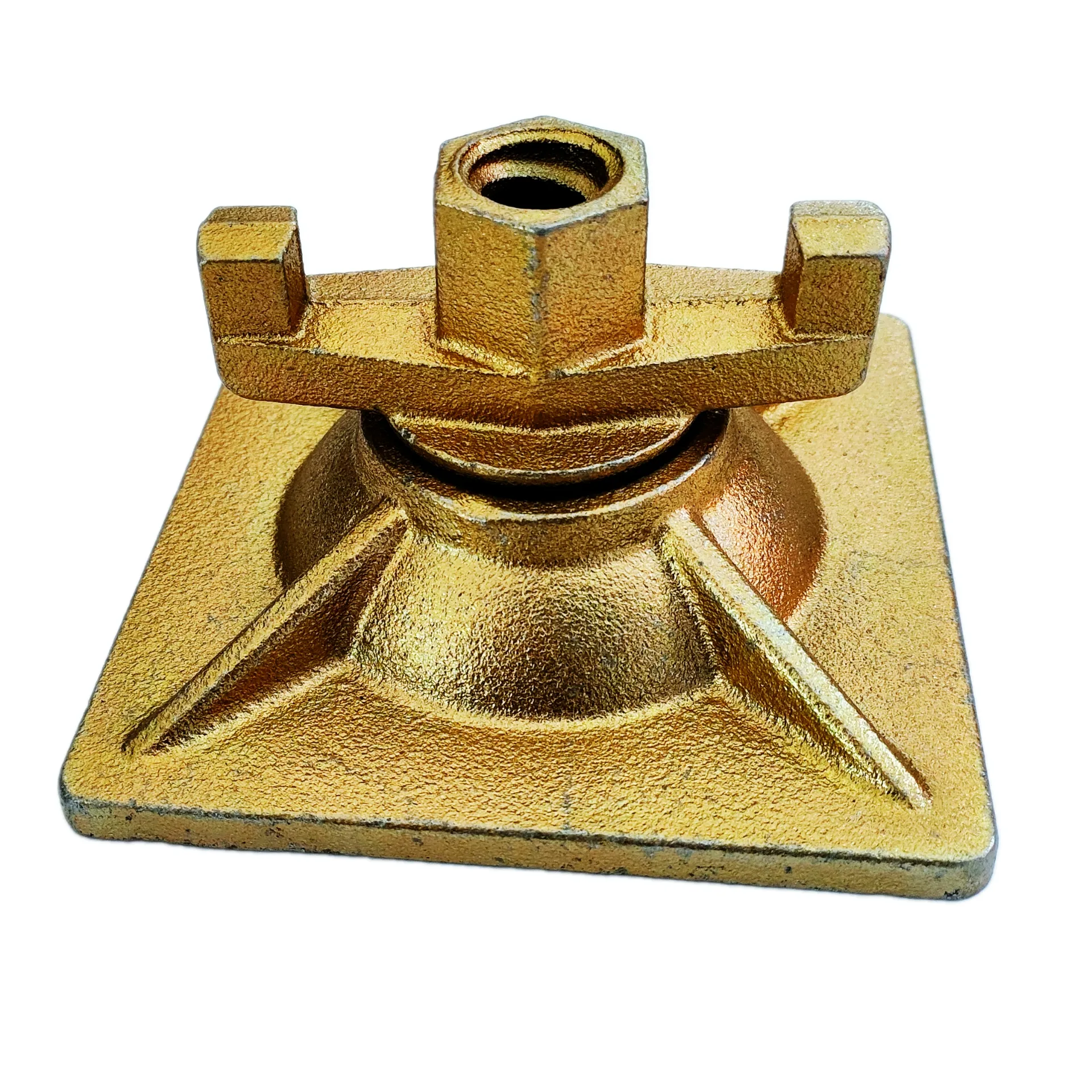
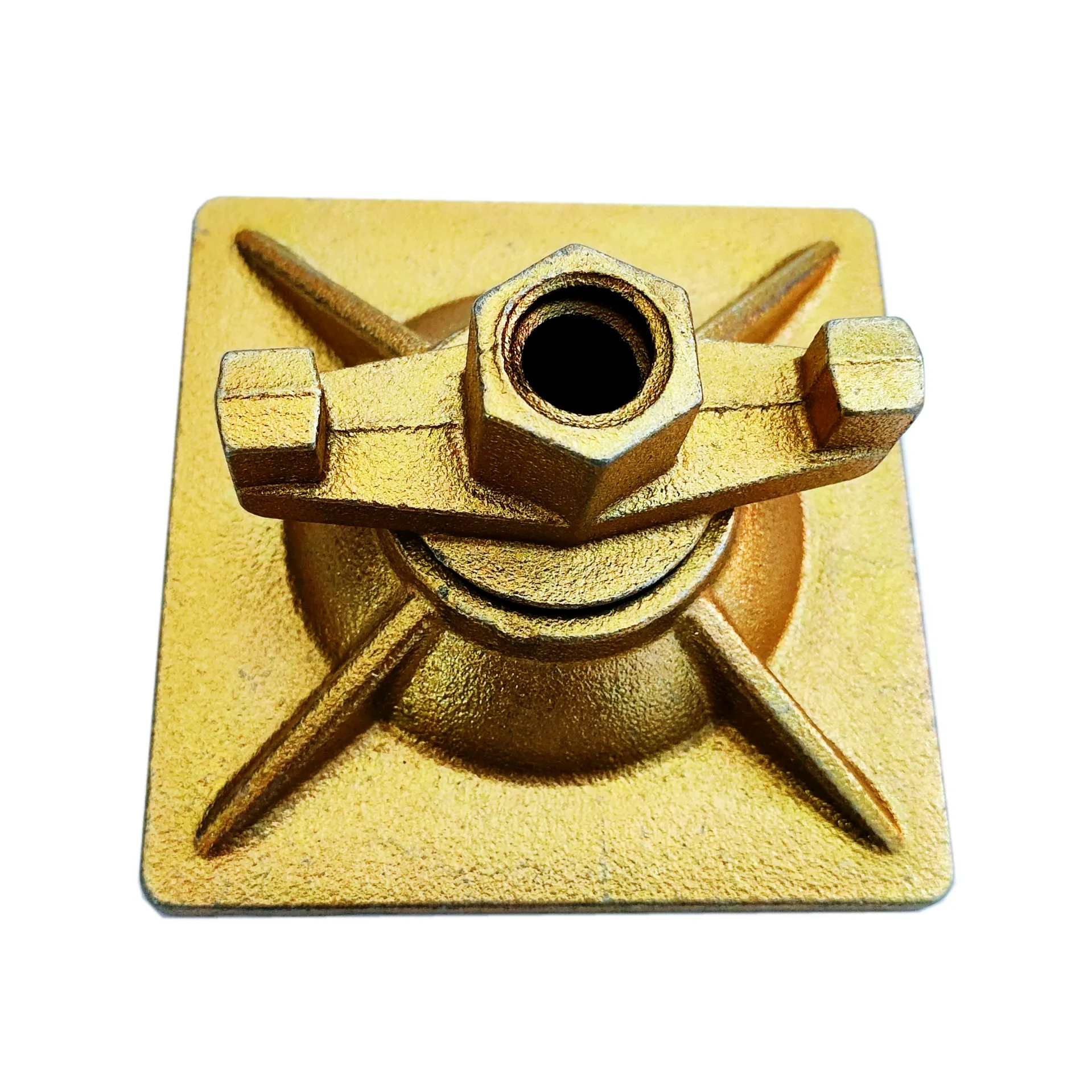
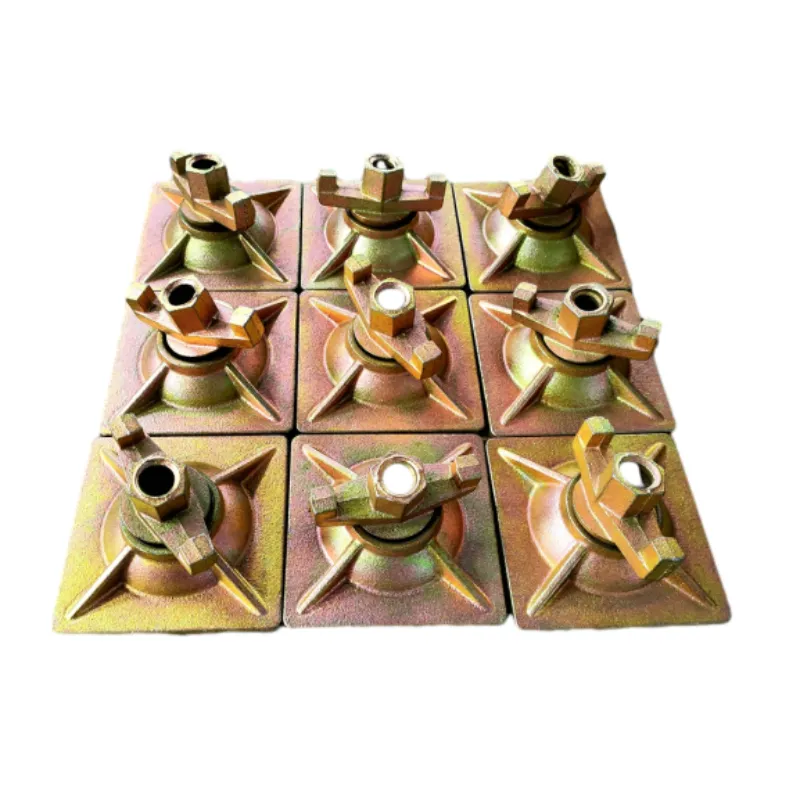
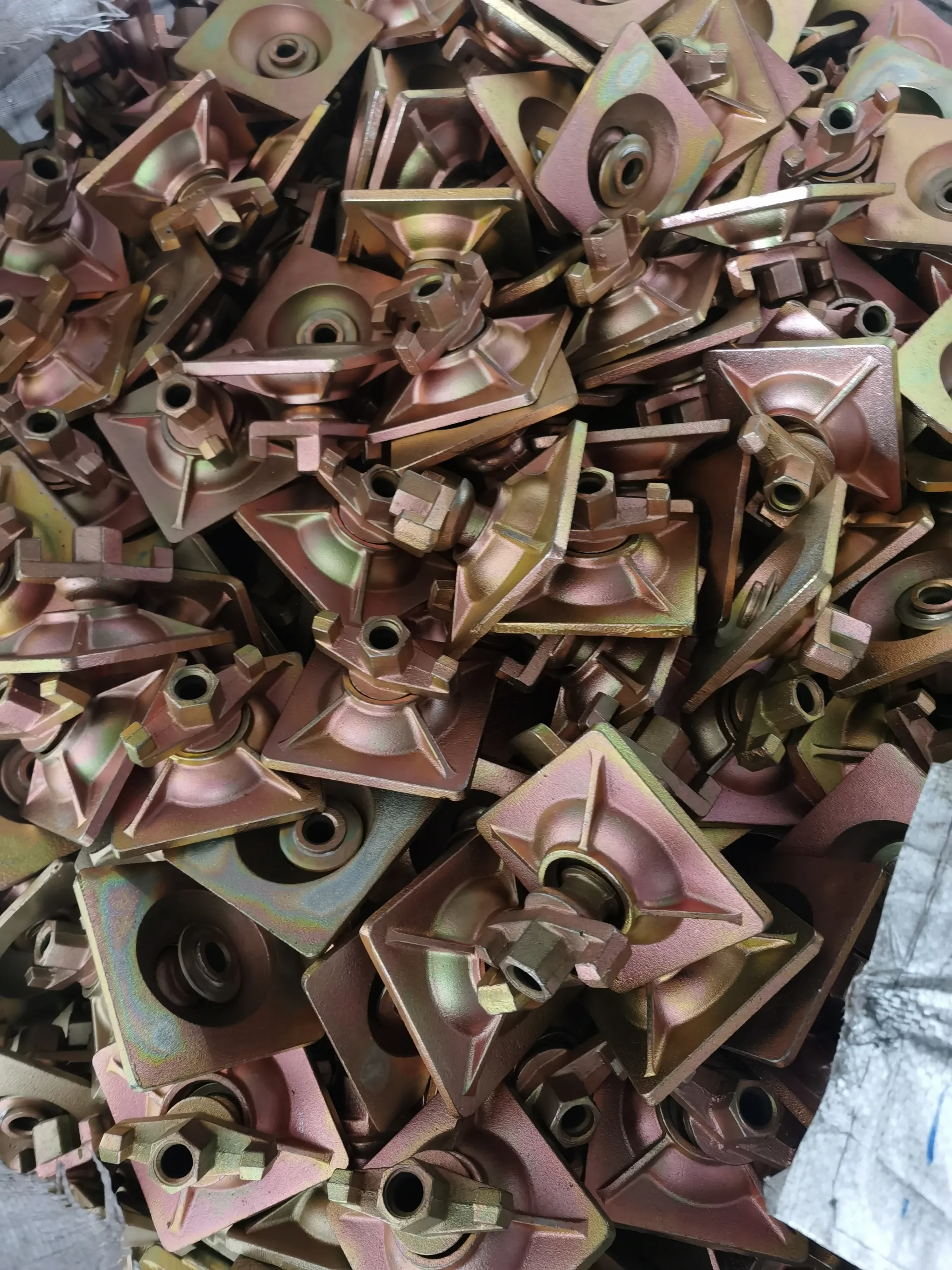
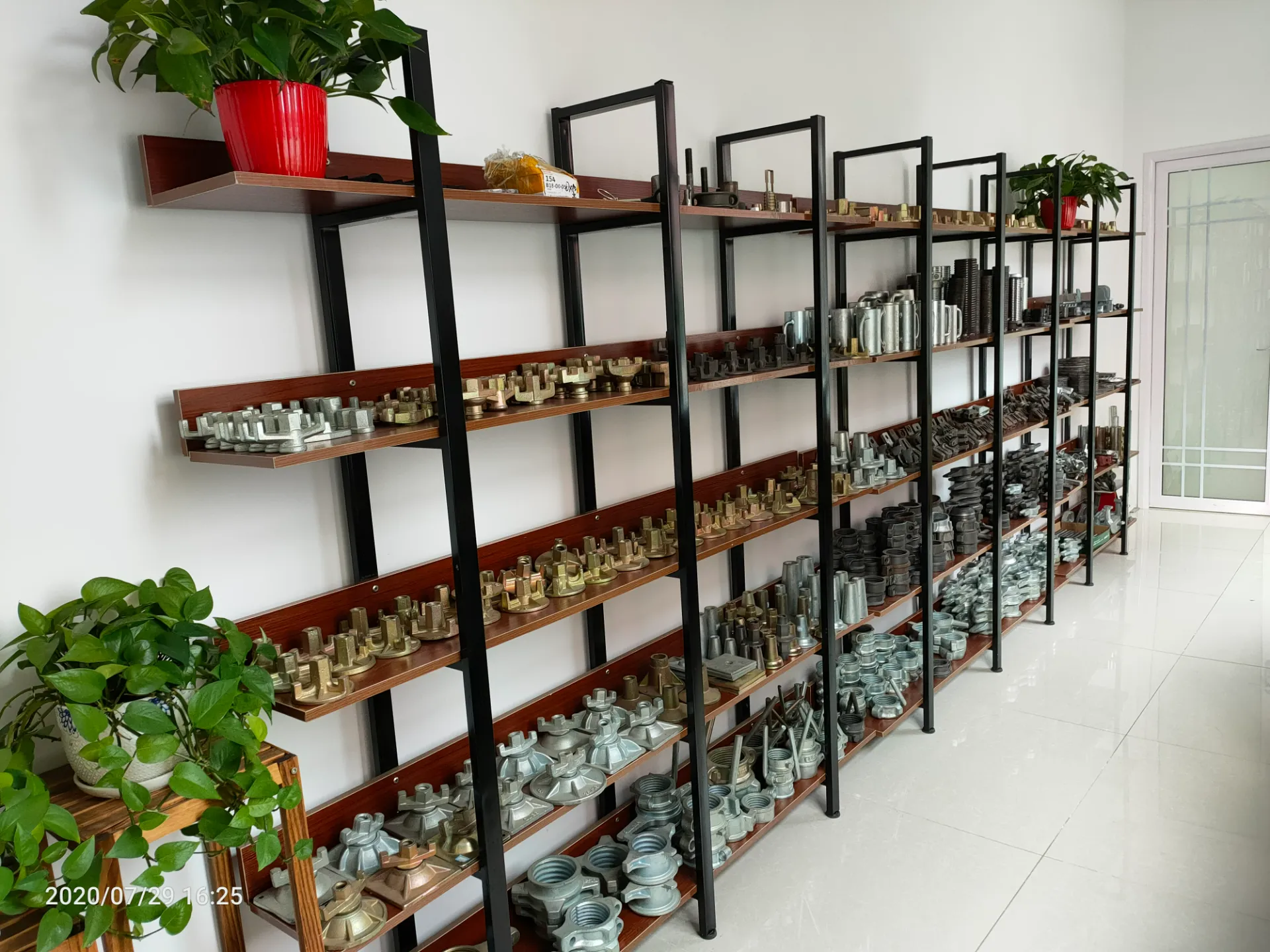
WRK offers types of formwork combin nuts for customer’s different requirements, popular standard sizes as following specifications:
|
Größe |
D15/17*10mm |
D15/17*10mm |
D15/17*10mm |
D15/17*10mm |
D15/17*10mm |
D20/22*10mm |
|
Design |
|
|
|
|
|
|
|
Tagesbasis. |
120 x 120 mm |
120 x 120 mm |
120 mm |
120 mm |
140 mm |
90*110 mm |
|
Gewicht |
1,10 kg |
1,25 kg |
1,00 kg |
1,10 kg |
1,38 kg |
0,96 kg |
|
Materialien |
Sphäroguss JIS FCD450 |
|||||
|
Oberfläche |
Natur/Gelb verzinkt/Silber verzinkt |
|||||
|
Pakete |
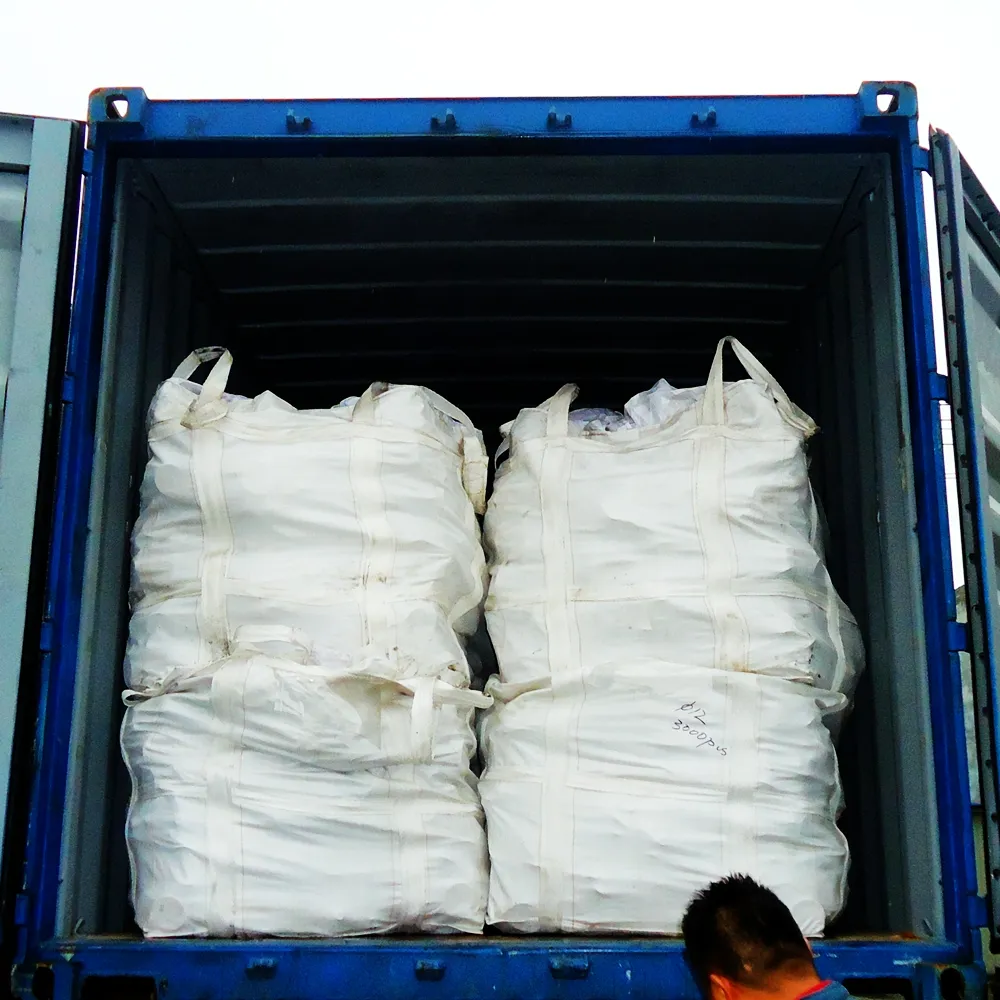
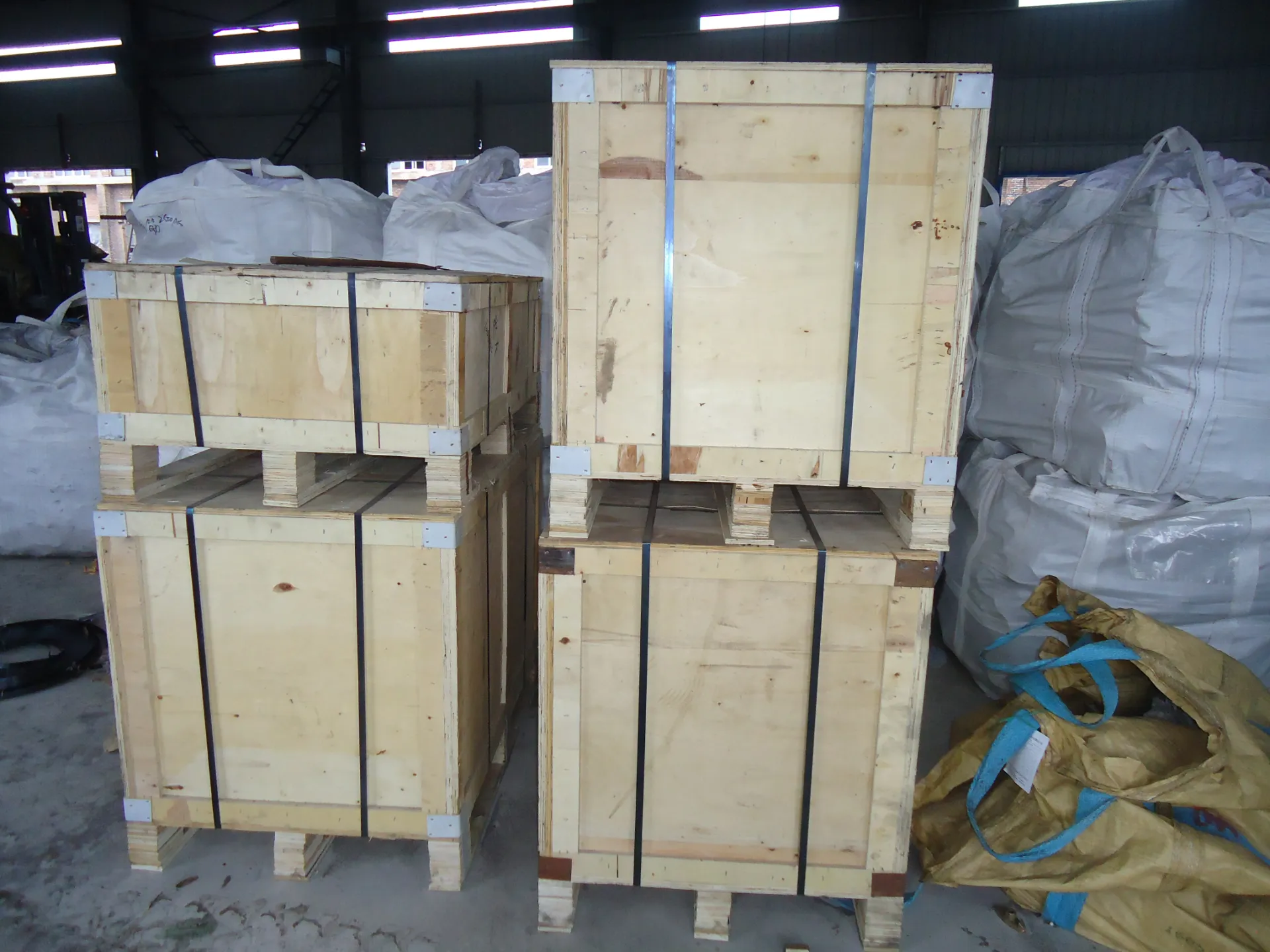
Säcke/Paletten/Holzkisten |
|||||
|
Ladekapazität |
Mehr als 180 kN |
|||||
|
Anwendung |
Schalungsankersystem |
|||||
|
Verwandte Produkte |
Schalungsanker, Wandplatte, Stahlkegel, Sechskantmutter, Schnellklemme usw. |
|||||
|
OEM |
Customer’s design available |
|||||
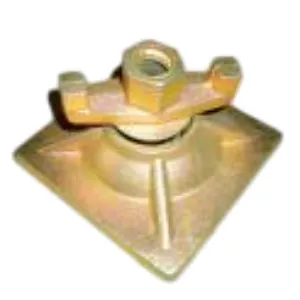
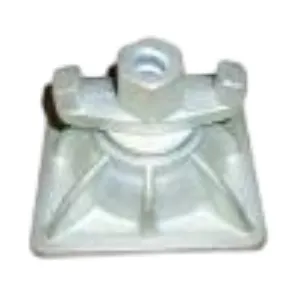
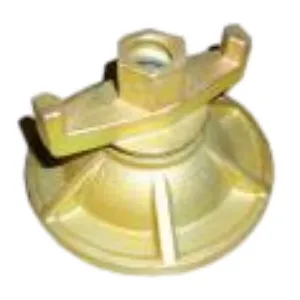
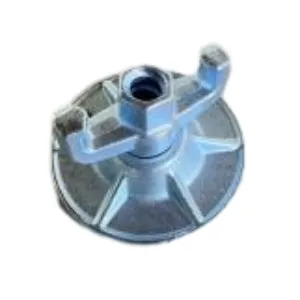
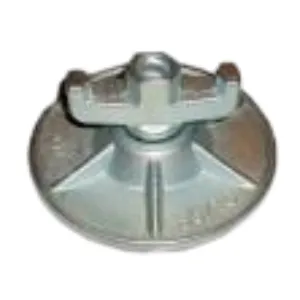
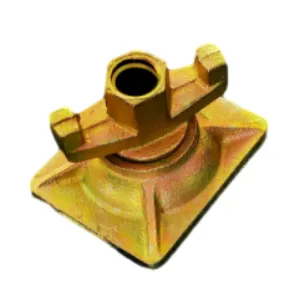
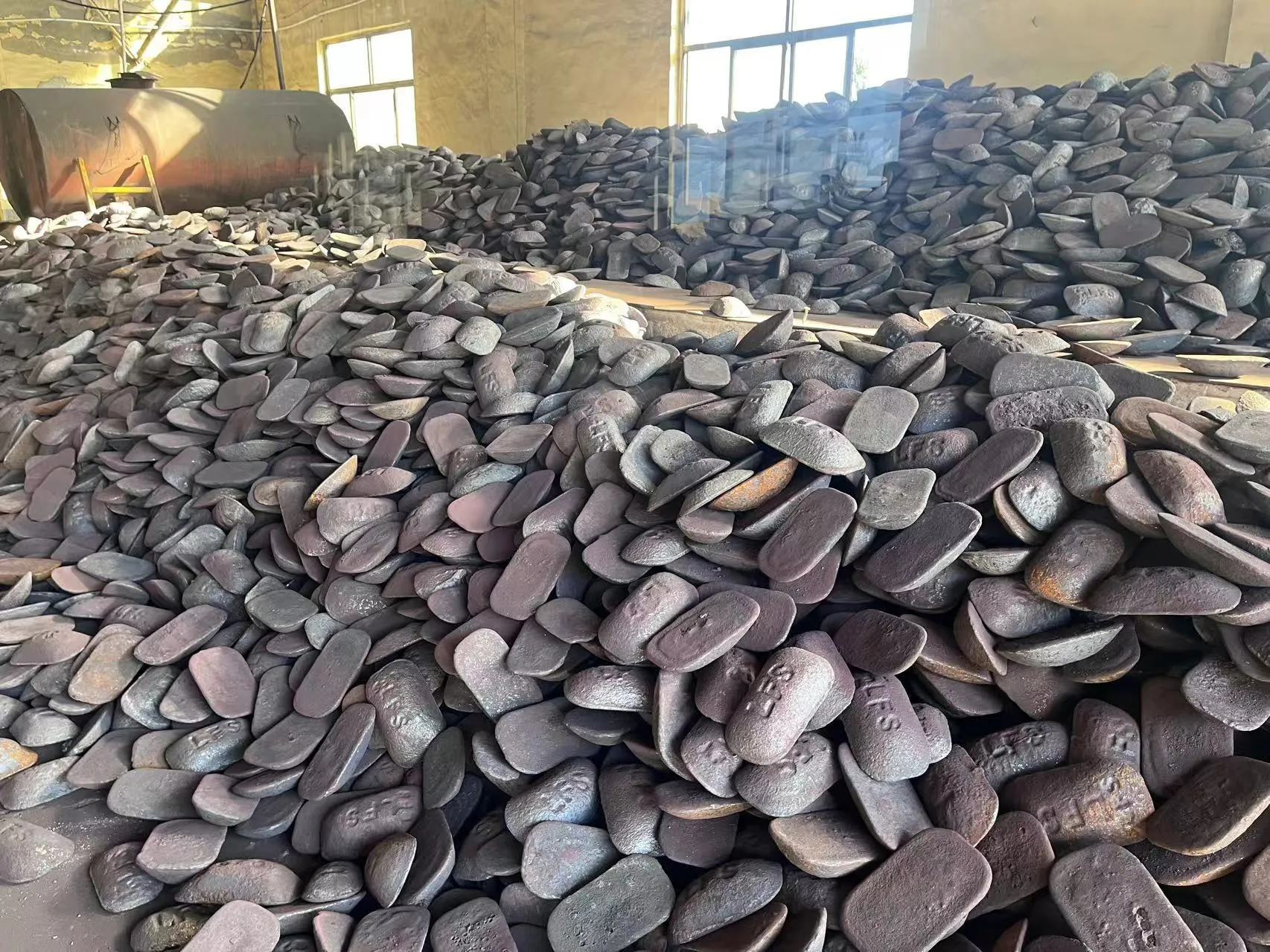
Um diese Muttern durch Gießen von duktilem Gusseisen herzustellen, umfasst der Prozess mehrere Schritte
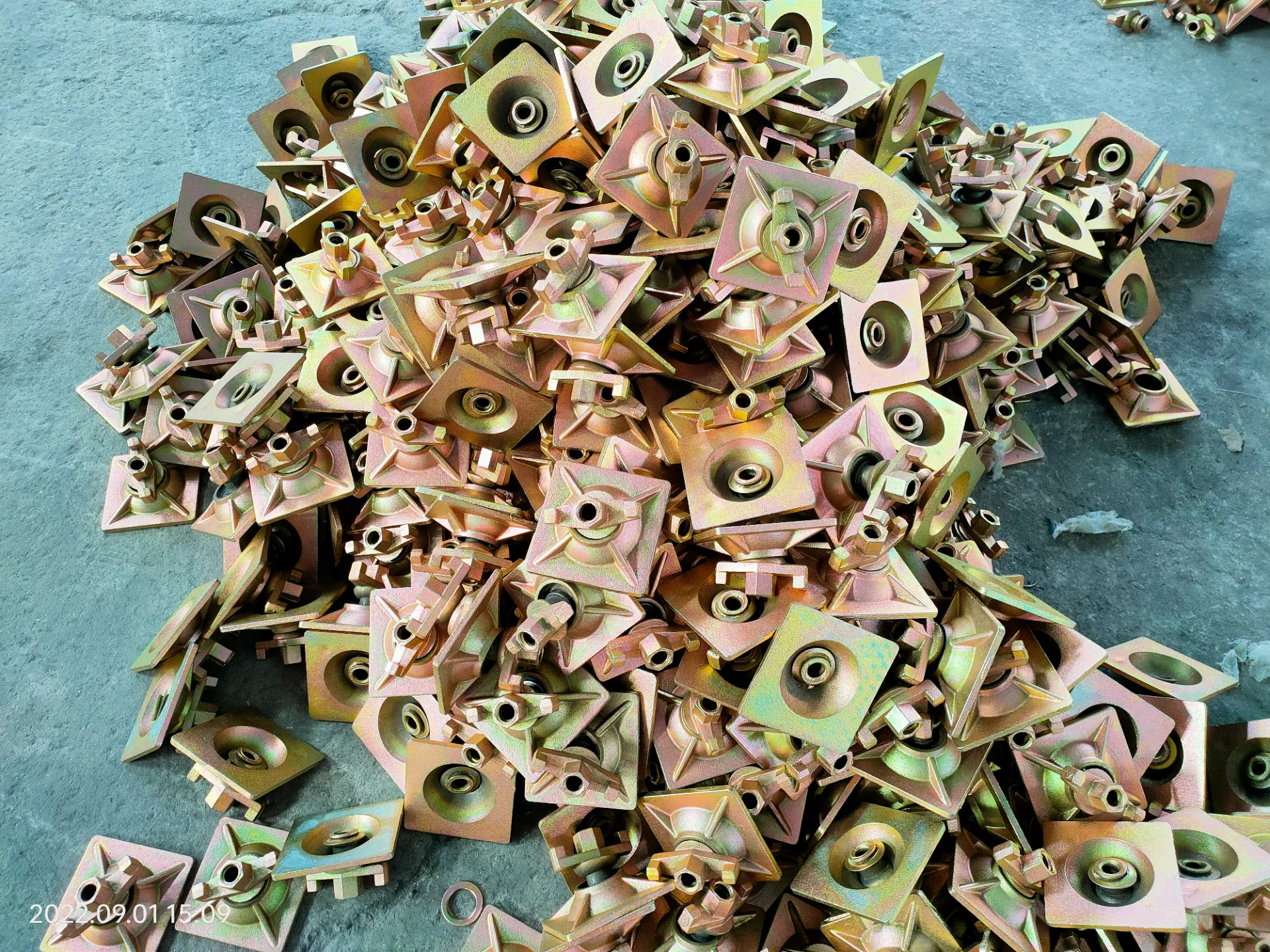
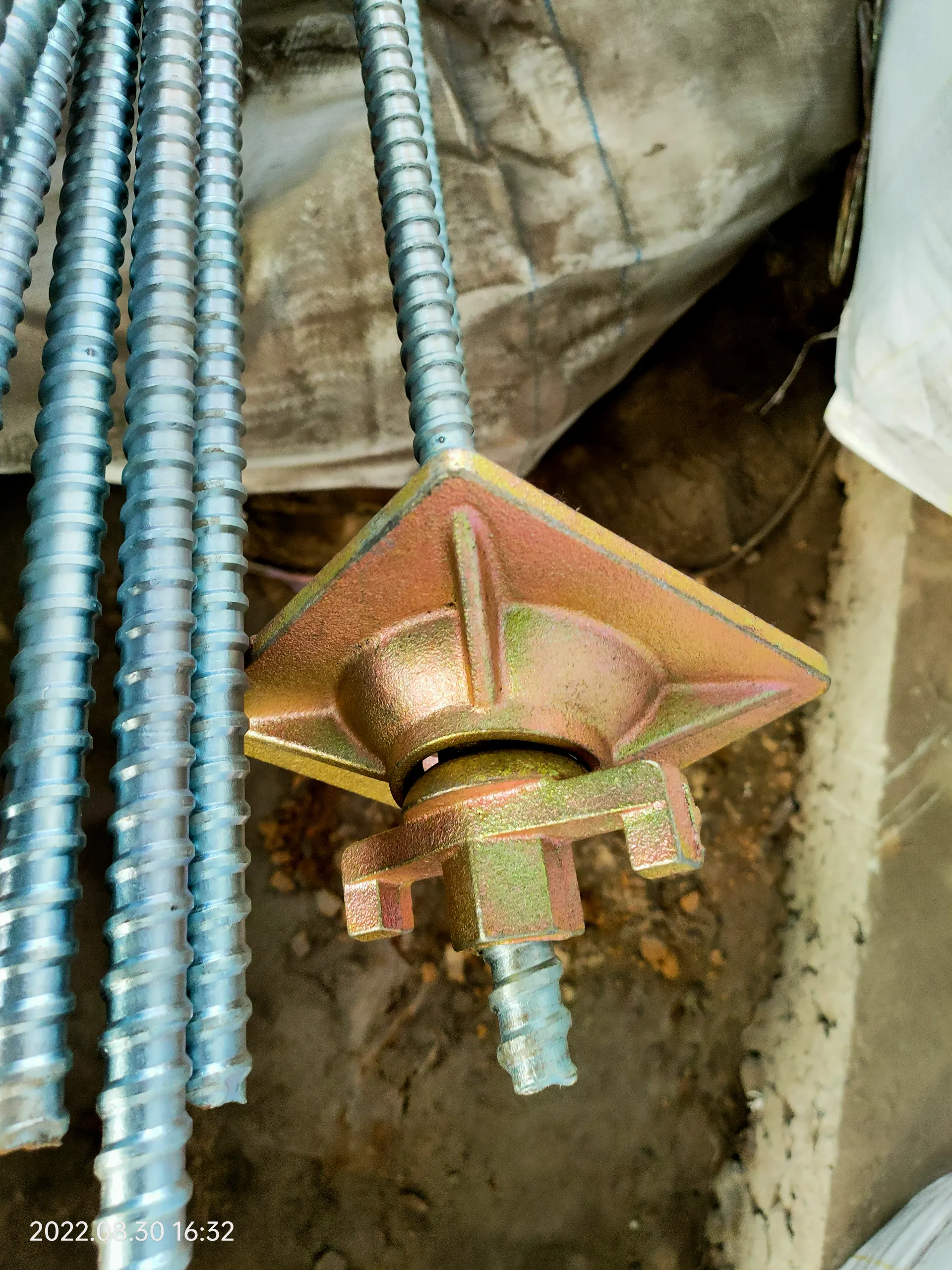
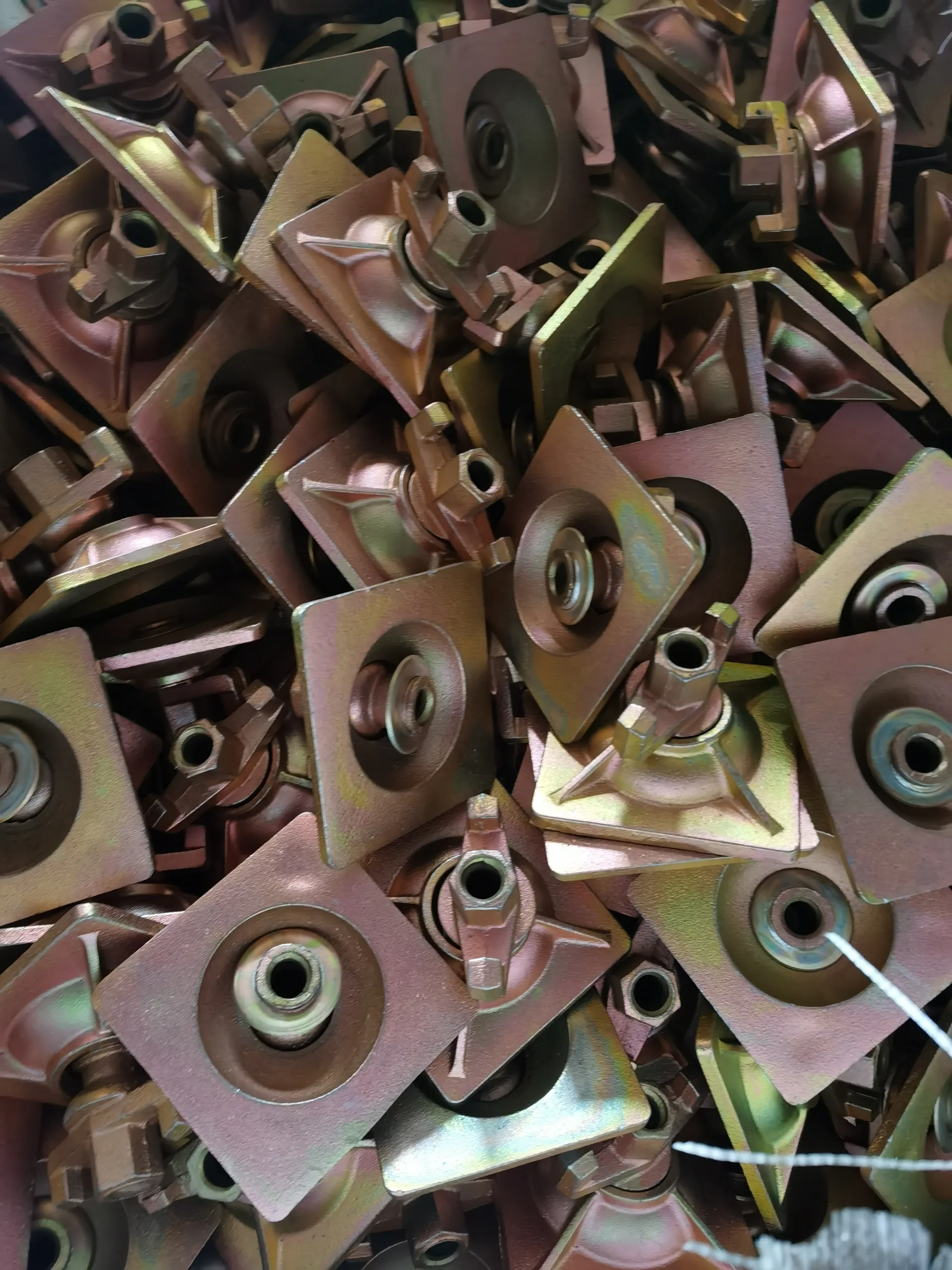
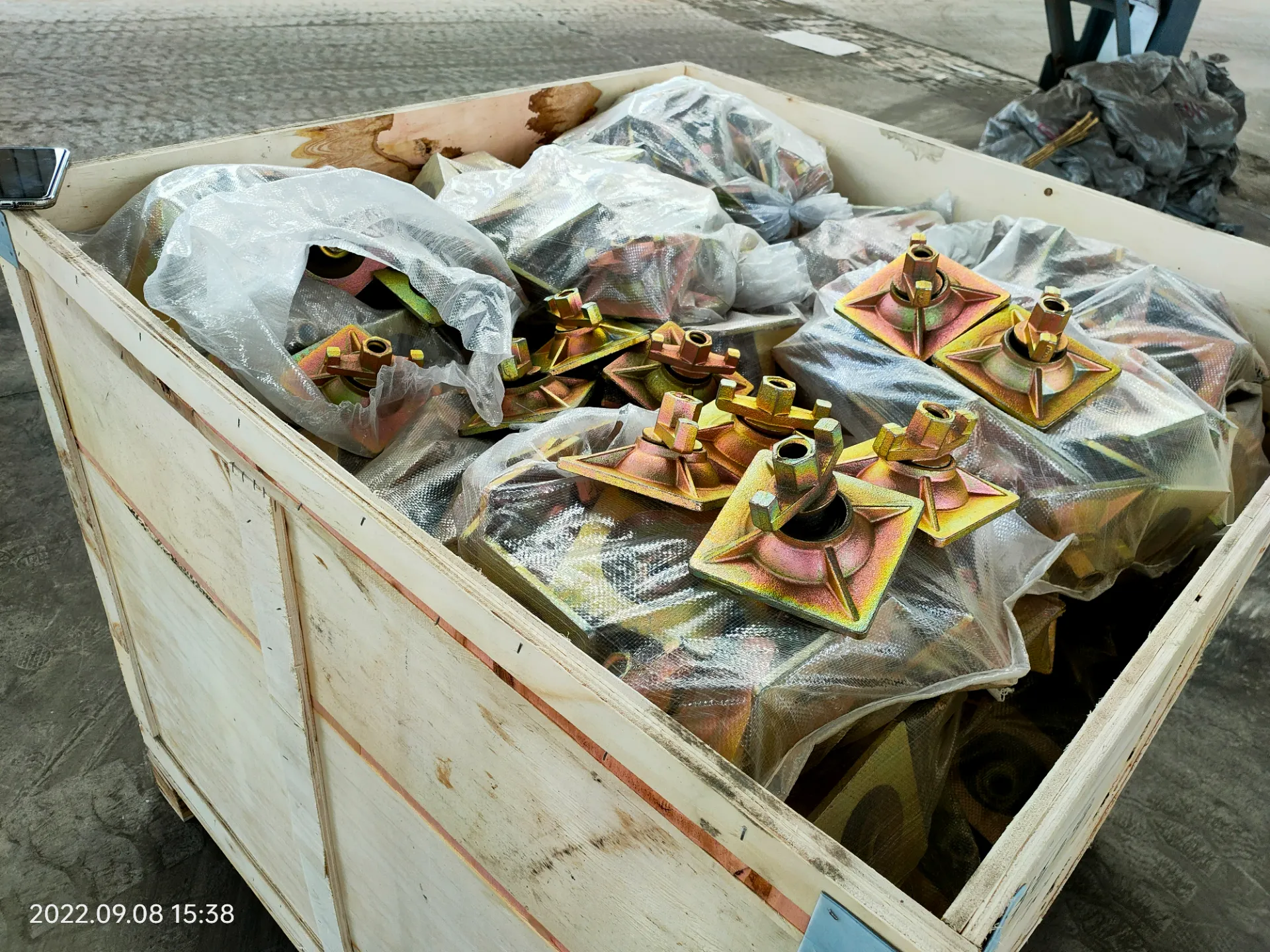
Benefits of Using Wingnut Pivot Plates in Construction Projects
Wingnut pivot plates are versatile hardware components widely used in construction, particularly in concrete formwork and scaffolding systems. At Cangzhou World Cup Trading Co., Ltd, we manufacture high-quality wingnut pivot plates designed to provide efficiency, safety, and durability in various construction applications.
One of the main benefits is ease of installation and adjustment. The wingnut design allows for manual tightening and loosening without additional tools, reducing labor time and effort. This is particularly advantageous in projects that require frequent adjustments, such as high-rise buildings or complex formwork setups. Workers can quickly pivot or secure panels, maintaining alignment and stability during concrete pouring.
Another benefit is enhanced stability and load distribution. Wingnut pivot plates provide a secure connection between formwork panels and supporting props. They distribute pressure evenly across the system, reducing the risk of panel misalignment or deformation under the weight of fresh concrete. This ensures that the final structure retains its intended shape and dimensions.
Durability and reusability are additional advantages. Made from high-strength steel with corrosion-resistant coatings, wingnut pivot plates can withstand harsh construction environments, including outdoor and high-humidity conditions. Their robust design allows for multiple uses, making them cost-effective for contractors who frequently reuse formwork systems.
Safety is also improved when using wingnut pivot plates. Properly secured plates reduce the risk of formwork collapse, panel shifting, or accidents on-site. This is critical in large-scale projects where worker safety and structural reliability are top priorities.
Finally, wingnut pivot plates are versatile and compatible with various formwork systems, including ringlock scaffolding, adjustable props, and modular concrete panels. Their adaptability ensures that contractors can rely on them across multiple projects.
In conclusion, the benefits of using wingnut pivot plates include ease of installation, enhanced stability, durability, safety, and versatility. At Cangzhou World Cup Trading Co., Ltd, our wingnut pivot plates provide construction professionals with reliable solutions for efficient and secure formwork systems.
Wingnut Pivot Plate vs Traditional Pivot Plate: What’s the Difference?
Wingnut pivot plates and traditional pivot plates are both essential components in formwork and scaffolding systems, but they differ significantly in design, functionality, and application. At Cangzhou World Cup Trading Co., Ltd, we produce high-quality wingnut pivot plates optimized for modern construction needs.
The primary difference lies in operation. Wingnut pivot plates feature ergonomic wings that allow manual tightening and loosening without tools. This makes installation, adjustment, and removal faster and more convenient, particularly in projects requiring frequent changes. Traditional pivot plates, on the other hand, often require wrenches or other tools, which increases labor time and may slow down workflow.
Another difference is adjustability and flexibility. Wingnut pivot plates allow workers to pivot panels easily, providing fine-tuning for alignment and leveling. This is especially important for high-rise buildings or uneven terrain where precise positioning is critical. Traditional plates offer less flexibility and may not allow quick adjustments, which can affect formwork accuracy.
Durability and material quality can also vary. Modern wingnut pivot plates are typically made from high-strength steel with corrosion-resistant coatings, ensuring long-term performance even in harsh environments. Traditional pivot plates may lack advanced coatings, making them more susceptible to rust and wear over time.
Safety is a key consideration. Wingnut pivot plates reduce the risk of over-tightening or improper installation because the wing design provides ergonomic leverage and even force distribution. Traditional plates, if not properly secured, may loosen or fail under heavy loads, posing safety hazards.
Finally, wingnut pivot plates are generally more versatile. They can be used with various formwork types, adjustable props, and scaffolding systems, while traditional plates may be limited in compatibility.
In summary, wingnut pivot plates offer tool-free operation, enhanced adjustability, durability, safety, and versatility compared to traditional pivot plates, making them ideal for modern construction projects.
What is a Wingnut Pivot Plate and How It Works in Formwork Systems
A wingnut pivot plate is a specialized construction component designed to secure and adjust concrete formwork panels efficiently. At Cangzhou World Cup Trading Co., Ltd, our wingnut pivot plates are engineered for high-strength performance, durability, and ease of use in various construction projects.
Wingnut pivot plates work by connecting formwork panels to supporting props or scaffolding, providing a stable and secure pivot point. The wingnut allows workers to manually tighten or loosen the plate without tools, enabling fast adjustments to panel alignment or height. This feature is particularly valuable in high-rise buildings, bridge construction, and modular concrete projects, where precise positioning is critical for safety and structural integrity.
The plate itself is typically made from high-strength steel, which ensures it can withstand heavy loads and lateral pressure from fresh concrete. The pivot mechanism distributes force evenly across the formwork system, reducing stress on individual panels and preventing misalignment or deformation. This contributes to the overall stability of the structure during pouring and curing.
Wingnut pivot plates are often used in combination with other concrete accessories, such as tie rods, adjustable props, and washers. This integration forms a reliable and reusable system that supports both vertical and horizontal loads. Their corrosion-resistant coatings make them suitable for outdoor and high-humidity environments, ensuring long-term durability and multiple reuses.
From a practical perspective, wingnut pivot plates improve installation efficiency. Manual operation reduces labor time, speeds up assembly and disassembly, and minimizes the need for specialized tools. This efficiency is especially beneficial in projects with tight schedules or large-scale formwork systems.
In conclusion, a wingnut pivot plate is a crucial component in formwork systems, enabling secure fastening, precise adjustments, and stable concrete pouring. Its ergonomic design, durability, and versatility make it an essential tool for modern construction projects.
concrete formwork
concrete steel formwork
construction formwork accessories
formwork accessories
formwork rapid clamp