May . 08, 2026 13:40 Back To List
How to Install Snap Ties in Concrete Formwork for Residential Plywood Forms
The success of a residential concrete foundation depends heavily on the preparation of the containment system. For most home builders and concrete contractors, the go-to solution for creating reliable, straight, and structurally sound basement walls is the use of snap ties concrete formwork. This method has become the industry standard due to its simplicity, cost-effectiveness, and the precision it offers when working with standard plywood panels. Understanding the nuances of installation is critical, as the pressure of wet concrete is unforgiving; a single misplaced tie can lead to a bulge or a blowout that is nearly impossible to fix once the curing process begins.
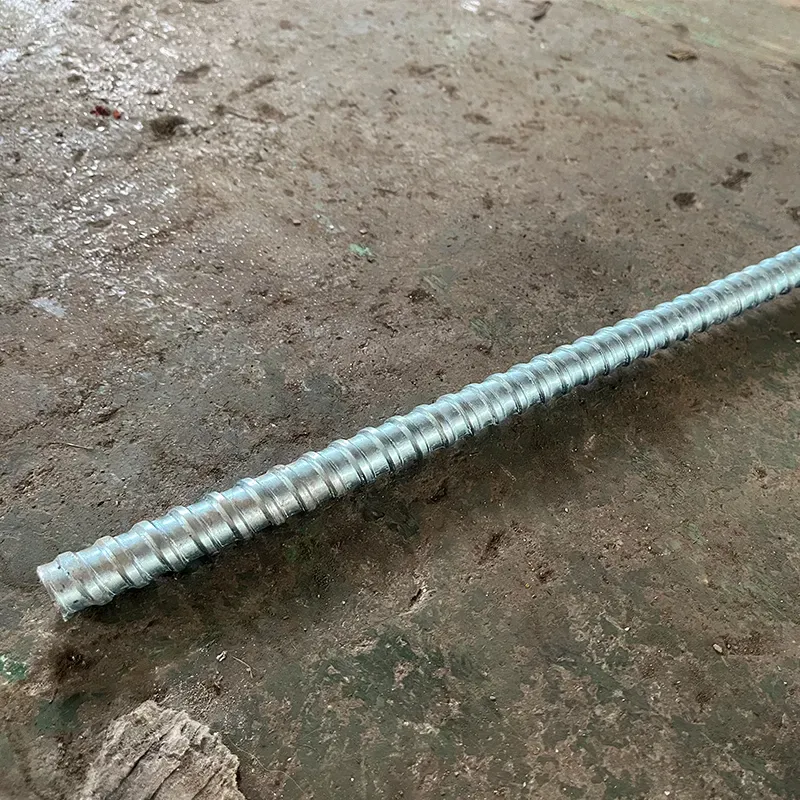
Preparing Your Layout for Snap Ties Concrete Formwork
Before the first piece of plywood is even stood up, a successful installation begins with a meticulous layout on the concrete footing. When utilizing snap ties concrete formwork, the spacing of the ties is determined by the height of the wall and the anticipated rate of the concrete pour. In residential settings, where walls typically range from four to nine feet, the ties act as the internal skeleton that prevents the hydrostatic pressure from pushing the forms apart.
Contractors must ensure that the footings are clean and level. Chalk lines are snapped to mark the exact thickness of the wall, providing a visual guide for placing the plywood panels. The beauty of the snap tie system lies in its ability to serve as both a tension member and a spreader. Because the tie has fixed metal washers or plastic cones set at a specific distance, it automatically sets the width of the wall, ensuring that a eight-inch wall remains exactly eight inches from the bottom to the top.
Selecting High-Quality Concrete Form Ties for Plywood
Not all ties are created equal, and choosing the right concrete form ties for plywood is the next vital step. These ties are characterized by their long, thin metal shafts and the unique flattened ends or "heads" that allow them to be locked into place using steel wedges. When working with plywood, the ties must pass through pre-drilled holes in the wood. It is essential to use ties that match the thickness of the plywood and the dimension of the dimensional lumber used for bracing, typically two-by-four or two-by-six studs.
The quality of the concrete form ties for plywood affects how easily the forms can be stripped later. High-quality ties are manufactured with precise "break-back" points. These are intentional weak spots located about an inch inside the concrete surface. After the concrete has hardened and the forms are removed, a quick twist of the protruding metal end with a snap-tie wrench or a pair of pliers should result in a clean break inside the wall. This prevents metal from rusting on the surface of the new foundation and allows for a clean patch job.
The Mechanical Process of Installing Concrete Formwork Snap Ties
The actual physical installation of concrete formwork snap ties follows a rhythmic progression. First, the inner face of the formwork is erected and braced. Holes are typically drilled at twelve-inch or sixteen-inch intervals, following the vertical studs. Once the first side is stable, the snap ties are inserted through the holes. A worker on the outside of the form slips a steel wedge—often called a "J-strong" or "shoe"—over the head of the tie. This wedge is then tapped down with a hammer, pulling the tie tight against the plywood and the horizontal walers.
As the second side of the formwork is raised, the protruding ends of the concrete formwork snap ties must be guided through the corresponding holes in the opposite panels. This requires coordination between two workers. Once the ties are through, the second set of wedges is installed. This creates a locked "sandwich" where the plywood panels are squeezed against the internal spreaders of the ties. The result is a rigid, uniform cavity ready to receive the concrete. It is a mechanical harmony that balances the outward push of the concrete with the inward pull of the steel ties.
Structural Reinforcement with Formwork Snap Ties and Walers
While the ties themselves hold the tension, they work in conjunction with horizontal bracing members known as walers. The use of formwork snap ties requires that these horizontal beams are perfectly aligned to distribute the load across multiple plywood sheets. Typically, two pieces of dimensional lumber are laid side-by-side horizontally, and the tie passes between them. The wedge then spans the gap between the two boards, effectively clamping the entire assembly together.
Alignment is the primary concern during this stage. If the formwork snap ties are not installed in a straight horizontal line, the walers will be crooked, leading to waves in the finished concrete wall. Experienced crews often use a string line or a laser level to ensure that the tie holes are drilled with absolute precision. This attention to detail ensures that the pressure is distributed evenly. In residential construction, where aesthetics matter for finished basements, avoiding these "waves" is just as important as the structural integrity of the wall itself.
Final Inspections of the Snap Tie Wall Forming System
Before the concrete truck arrives, a final walk-through of the snap tie wall forming system is mandatory. A contractor must check every single wedge to ensure it is tight and fully seated. Vibrations during the pour or even heavy wind can cause loose wedges to slip. Furthermore, the worker should inspect the "hairpin" or "tie-head" to make sure it hasn't been bent or damaged during the insertion process. If a tie is compromised, it may not hold its rated load, leading to a localized failure.
The snap tie wall forming system is also evaluated for its "plumbness." Even if the ties are tight, the entire wall can lean if the external bracing is insufficient. The ties keep the panels at the correct distance from each other, but they do not inherently keep the wall vertical. Strongbacks—vertical braces—are attached to the horizontal walers and anchored to the ground to ensure the wall remains 90 degrees to the footing. Once the pour begins, the crew continues to monitor the ties, watching for any sign of "weeping" or movement that might indicate a wedge is loosening under the weight of the rising concrete.
Latest News
-
The Ultimate Guide to Formwork Tie Rod Systems in High-Rise ConstructionNewsMay.08,2026
-
Integrating Wall Tie Rods for Aluminium Formwork in Modern Building SystemsNewsMay.08,2026
-
Enhancing Load Capacity With Anchor Nut for Tie Rod and Support ComponentsNewsMay.08,2026
-
Different Types of Concrete Form Ties for Structural IntegrityNewsMay.08,2026
-
Concrete Form Tie - Cangzhou World Cup Trading Co., Ltd. | Durable Construction Solutions&Secure FasteningNewsFeb.27,2026